Nevada Senators Shield State Oversight of Prediction Markets from CFTC

Nevada senators are fighting to keep state oversight of prediction markets and event contracts instead of ceding ground to the CFTC. The dispute centers on jurisdiction and compliance paths for operators. Sportsbooks and suppliers must track outcomes for impacts on product integration and costs.
SCCG Take — Operators should model dual compliance paths now. Clarity at state level has historically sped innovation while overlap raises costs and delays launches.
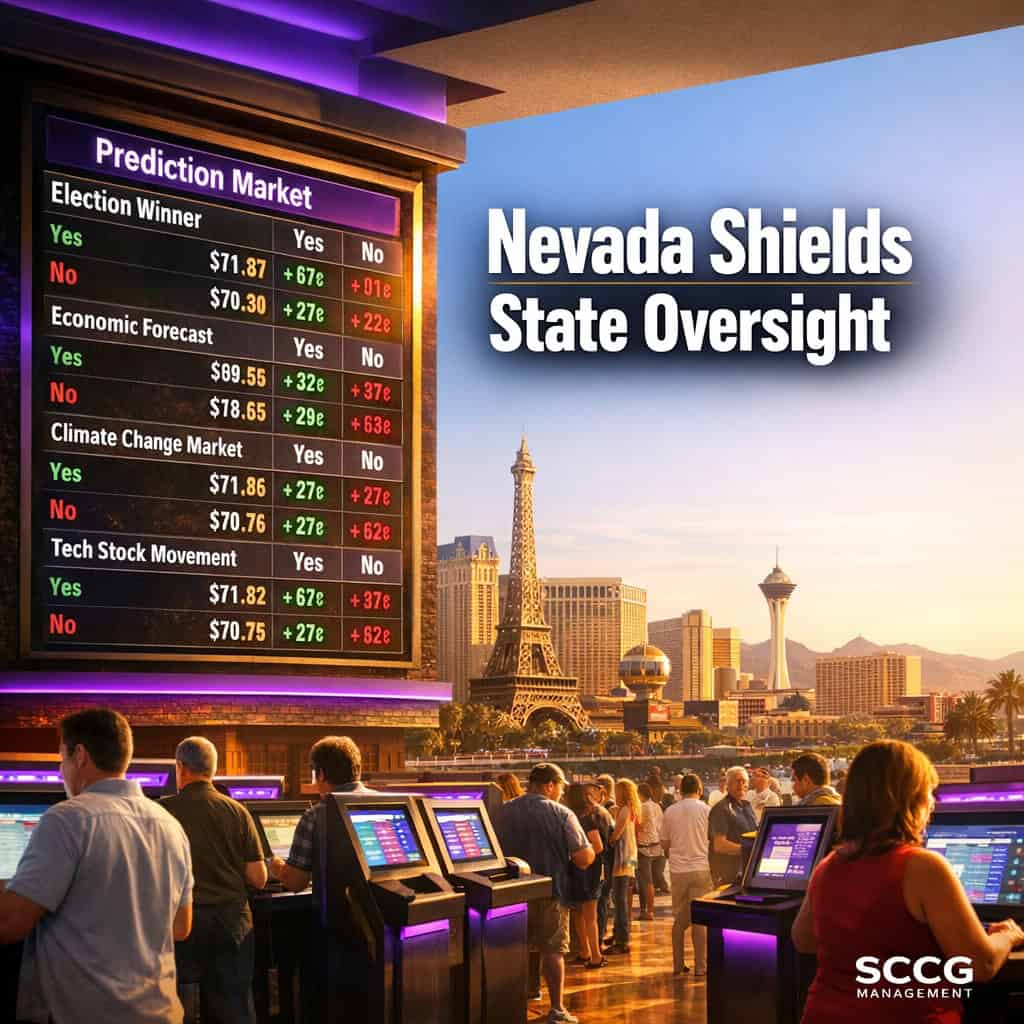
Nevada Senators Move to Shield State Oversight of Prediction Markets from CFTC Reach
Nevada senators are fighting to protect state oversight of prediction markets. The effort targets event contracts and aims to limit CFTC involvement in an area long managed at the local level. This push arrives as prediction markets gain traction alongside established sports betting operations.
The senators argue that state control better serves Nevada’s unique position as a gaming hub. Clarity at the state level supports consistent standards without layering on federal commodity rules. As reported by the Las Vegas Sun the dispute highlights friction over which regulator ultimately calls the shots.
The Dispute Over Event Contracts
Event contracts sit at the center of the debate. Nevada treats them under its gaming framework while the CFTC views them through a derivatives lens. The senators want to preserve the existing state apparatus rather than cede ground to Washington.
This is not abstract. Operators building products that reference real world outcomes need to know which compliance path applies. Mixed signals raise the cost of integration and slow deployment timelines.
From the supplier side this kind of regulatory ambiguity is what stalls commercial deals. Platforms hesitate to commit engineering resources when the rule book might change mid project.
Operational Impact on Nevada Sportsbooks
Sportsbooks in Nevada already navigate a mature regulatory environment. Adding prediction market features requires clear boundaries to avoid compliance overlap. State oversight has historically allowed faster adaptation to local market needs.
In my experience across European regulated markets operators price in regulatory overhead faster than most analysts expect. The same pattern holds here. Uncertainty around CFTC expansion forces operators to maintain parallel compliance tracks which eats margin.
Data infrastructure teams must map every contract type to the correct regulator. That mapping becomes harder when two agencies claim jurisdiction over similar products. The result is delayed product launches and higher legal spend.
Risks in a Split Regulatory Regime
Where the risk lies is in prolonged overlap between state and federal rules. Operators could face dual audits or conflicting guidance on permitted contract language. Tribal partners face added complexity if federal authority alters compact interpretations.
A counterargument holds that CFTC expertise in derivatives might bring sharper risk controls. Yet that view assumes federal rules will align with Nevada’s consumer protection priorities which the senators dispute. The limitation is that one size fits all regulation rarely fits gaming’s regional variations.
Prediction market liquidity depends on operator confidence. Extended legal battles erode that confidence and keep volumes fragmented across uncertain jurisdictions.
Lessons from Supplier Side Experience
Eighteen years in iGaming and sportsbook operations have shown that regulatory clarity unlocks product innovation faster than any technology upgrade. When operators know the lane they can price risk accurately and build hedges that work.
The Nevada approach has produced tight integration between sportsbooks and related markets. Federal expansion risks disrupting those linkages without delivering measurable improvements in market integrity or consumer safeguards.
Operators should model both scenarios now. One path keeps state primacy and maintains existing workflows. The other introduces CFTC registration layers that change everything from reporting to capital requirements.
The Operational Calculus
This fight will test how quickly the industry adapts to mixed regulatory signals. Nevada’s stance protects a model that has delivered reliable oversight for decades. Operators and tech suppliers must prepare contingency plans that preserve flexibility regardless of the outcome.
The real test comes in execution. Platforms that can route contracts under either regime will hold an edge. Those waiting for final resolution may find themselves several product cycles behind when clarity finally arrives.
Reporting: Nevada senators fight to protect oversight of prediction markets – Las Vegas Sun (news.google.com)
State-level clarity beats federal overlap—operators must plan dual compliance paths now or face launch delays.
We've tracked this turf war across 30 years and 150+ partners. State regulation historically moves faster, costs less, and lets innovation breathe. Federal-state overlap kills momentum. Nevada's move signals whether prediction markets stay nimble or get bogged down in dueling compliance frameworks.
- Nevada senators defending state oversight of prediction markets against CFTC encroachment
- Dual compliance paths required—operators should model both scenarios immediately
- Jurisdictional clarity at state level has historically accelerated launches and lowered integration costs
SCCG angle: We're tracking this with operators and regulators in Nevada right now. Our network spans both sides of this fight. We can help you model which compliance path gets you live fastest and which partners have already navigated state-level approval—no guessing required.
Gaming, betting and prediction markets — the desk’s read, every weekday.
Subscribe →