Brazil to tighten rules on sports betting advertising

Brazil will mandate cigarette-style warnings (“betting makes you lose money,” etc.) on all sports betting ads, ban urgency tactics and commentator recommendations, and impose fines up to 20% of revenue. This follows blocking 2.8M welfare users and 25k illegal sites. Licensed operators face rising compliance costs while illegal platforms remain unconstrained.
SCCG Take — This structural shift raises the compliance bar for licensed operators and risks tilting the competitive balance toward the unregulated market. Client-partners must redesign marketing now while pressing for even-handed enforcement across LATAM.
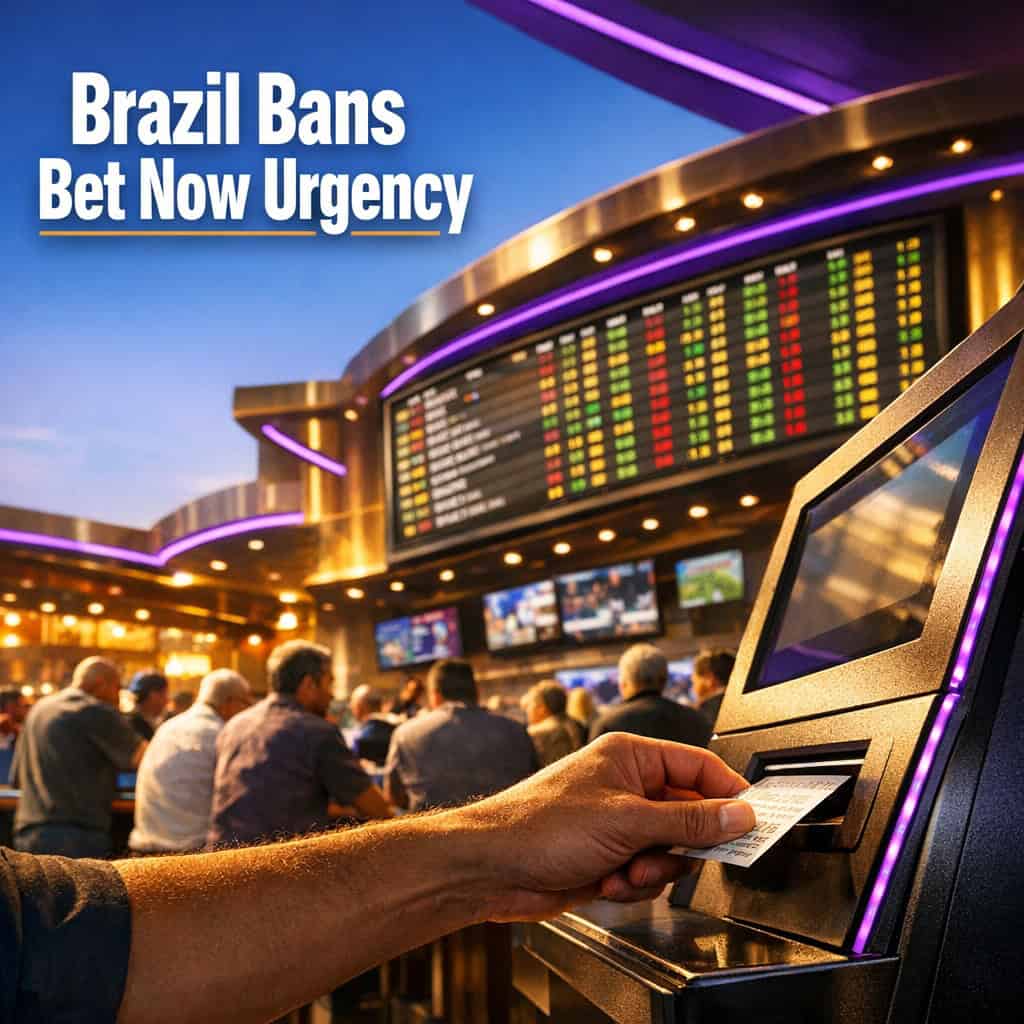
Brazil Tightens Sports Betting Advertising with Mandatory Health Warnings and Expanded Sanctions
Key Takeaways
- Mandatory Warnings: All licensed betting advertising must prominently display “betting makes you lose money,” “betting can cause addiction,” and “betting is not an investment.”
- Prohibited Tactics: Bans on urgency cues like “bet now,” framing bets as investments or income solutions, and using high-value wins as hooks.
- Strict Penalties: Violations can trigger fines of up to 20% of revenue, suspensions of up to 180 days, or permanent licence loss for repeat offences.
- Enforcement Data: More than 25,000 illegal sites blocked, 2.8 million welfare beneficiaries removed from platforms, and 1.4 million Brazilians diagnosed with gambling disorder.
Brazil has blocked 2.8 million welfare recipients from licensed betting platforms, equivalent to 10.4% of the 27 million people covered by Bolsa Família and BPC programmes. This figure represents 11.2% of the roughly 25 million Brazilians who placed at least one bet in 2025. At the same time, authorities have blocked more than 25,000 illegal betting websites and removed hundreds of influencer profiles.
These enforcement numbers illustrate the scale of Brazil’s “zero tolerance” stance toward unlicensed activity. Now the government is extending that oversight to advertising. According to reporting by G3 Newswire, Finance Minister Dario Durigan announced new ordinances requiring prominent health warnings in every advertising format from TV and radio to online and digital platforms.
Mandatory Health Warnings and the Push Against Misleading Campaigns
The required messages are direct: “betting makes you lose money,” “betting can cause addiction,” and “betting is not an investment.” Durigan stated these warnings counter campaigns that present wagering as easy money, a financial planning tool, or a route to supplementary income.
The measures form part of a broader strategy to tighten oversight of the regulated fixed-odds betting market. A related G3 Newswire dispatch on a Chamber of Deputies Sports Committee hearing highlighted parallel concerns from health experts. Psychiatrist Leonardo Carriço compared current betting publicity to the era of unrestricted cigarette advertising.
“The blatant exposure in sports and in all other social spheres ends up producing the impression that it is a 100% normal activity, free of risks,” Carriço told lawmakers. He cited estimates of 1.4 million Brazilians diagnosed with gambling disorder and around 11 million with risky gambling behaviour.
Broadcast Restrictions and Prohibited Advertising Practices
The rules reach into live sports coverage. Commentators, analysts, and broadcast professionals will be prevented from recommending specific bets or odds during programmes. Durigan argued it is not acceptable for specialists to guide viewers toward particular wagers under the guise of technical commentary.
Licensed operators face additional limits. They cannot use urgency cues such as “bet now” messages or implications that an offer will disappear unless consumers act immediately. Presentations of betting as an investment product, a way to top up household income, or a solution to financial difficulties are banned.
Past payouts or high-value wins cannot serve as promotional hooks. Durigan said such practices mislead consumers by implying a high probability of financial gain. A separate ordinance reinforces the crackdown on illegal betting by barring media outlets from promoting unlicensed platforms.
Sanctions, Accountability, and the Self-Exclusion Backdrop
Penalties for licensed operators are significant. Breaches can result in fines of up to 20% of revenue, temporary suspension of authorisation for up to 180 days, and permanent loss of licence in serious or repeat cases. Media companies and advertisers face consumer protection fines around BRL 14 million for abusive advertising.
Operators remain responsible for campaigns run through contracted influencers. More than 925,000 people have registered with the centralised self-exclusion platform. The ban can be set for a fixed term or indefinitely, with the open-ended option requiring 12 months before it can be lifted.
Operators must run fortnightly checks on customer databases using the Sigap system and the bettor’s CPF tax ID. The system returns a clear “blocked” or “not blocked” status for Bolsa Família and BPC beneficiaries. Officials note this automated vetting currently covers only those two programmes even though the law also prohibits betting by other specified groups who must self-declare.
Public Health Costs and the Legislative Call for an Advertising Ban
At the sports committee hearing, researcher Kelly Noronha urged lawmakers to weigh costs to the public health system, psychosocial care, and social assistance as family indebtedness rises. “Are we really profiting from this or are we passing on a much larger bill to society?” she asked.
Letícia Ferraz of the Laboratory for Human Rights and New Technologies argued that advertising needs reshaping to emphasise information and education about risks, adding that simply removing ads would be insufficient. Committee president Saulo Pedroso, who is sponsoring Bill 1212/25 to prohibit all advertising, commercials, and promotions related to sports betting and electronic games of chance, warned that current volume runs counter to regulation’s protective aims.
The combined G3 Newswire coverage captures a clear regulatory tightening. Yet it underemphasises the operational load these layered requirements place on licensed operators already managing fortnightly database checks, self-exclusion compliance, and licence fees of R$ 30 million. The coverage also leaves open how aggressively authorities will pursue media outlets and influencers tied to unlicensed platforms.
The Compliance Cost and Illegal Market Risk
Stricter advertising rules applied only to the regulated sector create a structural asymmetry. Licensed operators must redesign every campaign, secure new creative approvals, train staff on broadcast restrictions, and accept the risk of 20% revenue fines or 180-day suspensions. Unlicensed operators face none of these constraints and can continue aggressive promotion outside SPA oversight.
Industry representatives have warned that self-excluded users and blocked beneficiaries can still reach illegal sites. Those platforms pay no licence fees, contribute no tax, and operate free of the centralised self-exclusion system or the new advertising-conduct rules. This gap risks undermining the very consumer protections the ordinances seek to advance.
The Regulatory Inflection Point Ahead
These developments mark a defining moment for Brazil’s betting market. The combination of health warnings, practice bans, and severe sanctions will raise compliance costs and force licensed operators to rebuild marketing strategies around transparency rather than urgency or implied returns. Success will depend on consistent enforcement against the illegal market that currently operates without these burdens.
Operators and investors should treat the new framework as a planning input that rewards disciplined, responsible positioning. Those who adapt earliest and engage constructively with regulators will be best placed to compete on trust and sustainability. Clear guardrails, uniformly applied, remain essential if the regulated sector is to deliver both revenue and consumer protection over the long term.
Reporting: Brazil to tighten rules on sports betting advertising (g3newswire.com)
Licensed operators now carry cigarette-level compliance costs while 25,000 blocked illegal sites show enforcement remains the real battleground.
We've guided partners through advertising pivots in every regulated market, and Brazil's new rules are as restrictive as anything we've seen outside Scandinavia. The 20% revenue fine and tobacco-style warnings reshape creative and media buying overnight. Licensed operators absorb the cost; illegal platforms ignore it—that imbalance is the strategic risk.
- Mandatory warnings: 'betting makes you lose money,' 'betting can cause addiction,' 'betting is not an investment' on all ads
- Bans urgency language, investment framing, and commentator endorsements; violators face fines up to 20% of revenue
- 2.8M welfare users blocked, 25k illegal sites shut—but unlicensed market remains unconstrained by new ad rules
SCCG angle: SCCG's compliance and creative network has redesigned ad campaigns in 30+ jurisdictions under responsible-gambling mandates. We connect Brazil-licensed partners to agencies, media buyers, and legal counsel who've navigated similar pivots in Europe and can help you redesign creative, test compliant messaging, and press regulators for enforcement parity—before your competitors do.
Gaming, betting and prediction markets — the desk’s read, every weekday.
Subscribe →