IBIA Frames Betting Integrity as Non-Negotiable for Africa’s $19.4 Billion GGR Expansion

IBIA warns that Africa’s betting GGR growth from $3.5B in 2021 to $19.4B by 2030 must be matched by scaled integrity monitoring and cross-border cooperation. The 2026 World Cup with ten African teams and $60B projected global handle heightens urgency. The 2025 MoU with the African iGaming Alliance supplies a foundation, yet alert data and regulatory fragmentation show more work remains.
SCCG Take — The IBIA-AIA partnership offers a scalable model for Africa’s varied landscape, but operators and regulators must accelerate adoption before 2026 World Cup volumes test it. This is an inflection point where early integrity investment protects client-partners and licensed markets.
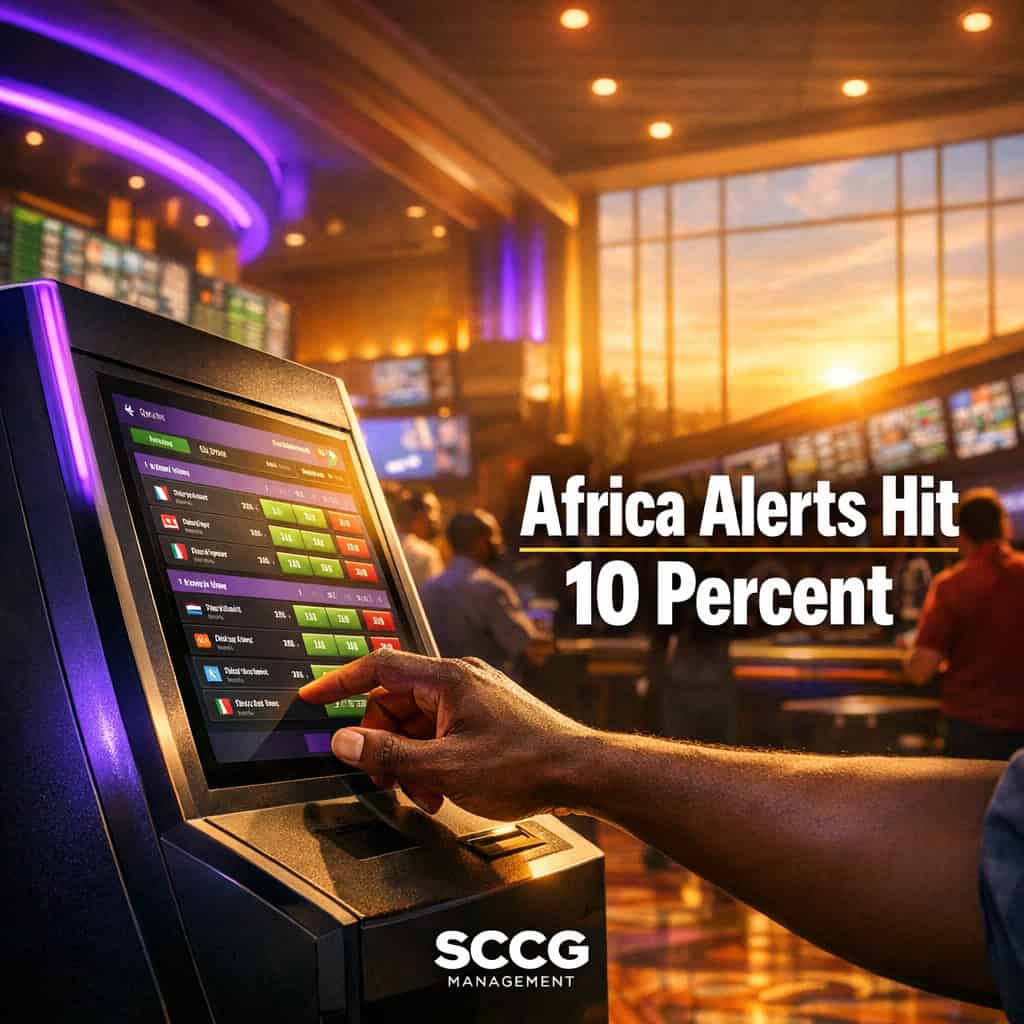
IBIA Frames Integrity as Non-Negotiable for Africa’s Projected Betting Expansion Toward $19.4 Billion GGR
Key Takeaways
- Market Projections: H2 Gambling Capital forecasts Africa’s land-based and online betting GGR rising from US$3.5 billion in 2021 to around US$19.4 billion by 2030, driven primarily by online channels.
- World Cup Stakes: The 2026 FIFA World Cup is expected to generate around US$60 billion in global betting activity and will feature a record ten African nations.
- Alert Data: IBIA recorded 31 suspicious betting alerts linked to African sporting events in 2025, representing approximately 10% of all global alerts, and 117 such alerts from 2021 to 2025.
- Strategic Alliance: IBIA and the African iGaming Alliance signed a Memorandum of Understanding in November 2025, establishing each as the other’s partner on betting integrity and policy across twenty African countries.
“The task now is to ensure that market growth is matched by stronger monitoring, formal integrity protocols and trusted cross-border cooperation.” Those words from IBIA CEO Khalid Ali cut to the heart of the structural shift underway across Africa’s regulated betting markets.
According to reporting by Sports Betting Operator, the continent is moving into the integrity spotlight at precisely the moment commercial opportunity accelerates. Licensed operators generate the account-level data essential for effective monitoring. Unregulated channels do not. That distinction matters when suspicious patterns cross borders, as they invariably do.
Africa’s Growth Trajectory and the Data Advantage
H2 Gambling Capital’s forecast underscores the pace: US$3.5 billion GGR in 2021 scaling to roughly US$19.4 billion by 2030. The majority arrives via online betting. IBIA, which monitors over $300 billion in sports bets annually across its members, sees this expansion as both commercial upside and integrity imperative.
Licensed markets produce transactional visibility. Operators can detect unusual staking, track patterns, and escalate alerts in ways opaque channels cannot. The more activity funneled through regulated operators, the stronger the integrity environment becomes. This is not abstract. It is operational infrastructure that protects sport, consumers, and licensed client-partners alike.
The 2026 World Cup as Inflection Point
The 2026 FIFA World Cup will place Africa squarely in the global betting conversation. With ten African nations competing and an expected US$60 billion in worldwide handle, interest in African teams, players, and domestic competitions will surge both locally and internationally.
Preparation cannot wait until tournament week. Monitoring frameworks, operator participation, and relationships among regulators, sports bodies, and law enforcement must already function at scale. A single suspicious pattern can span multiple jurisdictions, payment flows, and operators. Intelligence sharing is therefore central, not optional.
Interpreting 2025 Alert Volumes
IBIA logged 31 Africa-linked suspicious betting alerts in 2025, roughly 10 percent of its global total. The five-year cumulative figure stands at 117. These numbers require careful reading. Alert volume reflects both underlying risk and the maturity of detection systems.
Rising alerts can signal improved capability rather than worsening integrity. As more operators join recognized networks and regulated markets deepen, detection sharpens. An alert is not a finding of corruption. It is the start of structured investigation. Viewed that way, the data highlights the value of formal protocols over fragmented efforts.
One section of the coverage underemphasizes the commercial lens for operators and investors. Early participation in cross-border monitoring networks is not simply compliance cost. It is risk mitigation that safeguards brand value, supports regulatory relations, and differentiates licensed offerings from gray-market alternatives in a market projected to approach US$19.4 billion.
The IBIA-AIA Partnership and Fragmented Reality
Africa is not one market. Regulatory sophistication varies sharply. Some jurisdictions advance modern frameworks while others remain earlier in development. Cooperation that is routine in parts of Europe or embedded from the outset in many U.S. state licenses cannot be assumed here.
The November 2025 Memorandum of Understanding between IBIA and the African iGaming Alliance therefore represents a practical step. IBIA becomes the AIA’s strategic betting integrity partner. The AIA, representing licensed operators across twenty countries, becomes IBIA’s policy and regulation partner for the continent. This linkage supplies meaningful reach.
Yet scalability remains the open test. Operator participation, formal reporting duties, clear escalation paths, and practical education for athletes and officials must all expand in tandem with the market.
The Scalability Imperative Ahead of 2026
The risk lies in timing. If formal integrity protocols and cross-border cooperation lag the projected growth to US$19.4 billion GGR and the betting surge tied to ten African World Cup participants, fragmented alerts may fail to convert into timely enforcement. Client-partners operating across these jurisdictions should treat the IBIA-AIA framework as foundational infrastructure rather than optional overlay.
The convergence of rising volumes, international betting flows, and a high-visibility tournament creates a defining moment. Markets that embed proven monitoring practices now will protect sport more effectively and position licensed operators for sustainable expansion. Those that defer risk ceding ground to opaque channels. The data, the partnership, and the calendar all point the same direction: act before the inflection point arrives.
Reporting: IBIA Warns Africa’s Betting Boom Must Be Matched by Robust Integrity Standards (sportsbettingoperator.com)
The 2026 World Cup will stress-test African integrity frameworks before they're ready—early investment determines who survives the spotlight.
We've watched every emerging market make the same mistake: chasing revenue before building guardrails. Africa is approaching a $60 billion World Cup moment with ten teams and fragmented regulatory frameworks. The IBIA-AIA MoU is a good start, but 31 alerts in 2025 tell us monitoring and enforcement need to catch up fast.
- Africa's betting GGR is projected to jump from $3.5B in 2021 to $19.4B by 2030
- 2026 World Cup features ten African nations and $60B in expected global handle
- IBIA logged 31 African suspicious alerts in 2025—10% of global total
SCCG angle: SCCG connects operators expanding into Africa with integrity vendors, compliance advisors, and local regulatory specialists across our 545-partner network. We help you embed monitoring early—before the World Cup volume hits—and navigate the AIA framework so your license and reputation stay clean.
Gaming, betting and prediction markets — the desk’s read, every weekday.
Subscribe →