The Sound of Conviction: Why SCCG Is Invested in Music Prediction Markets
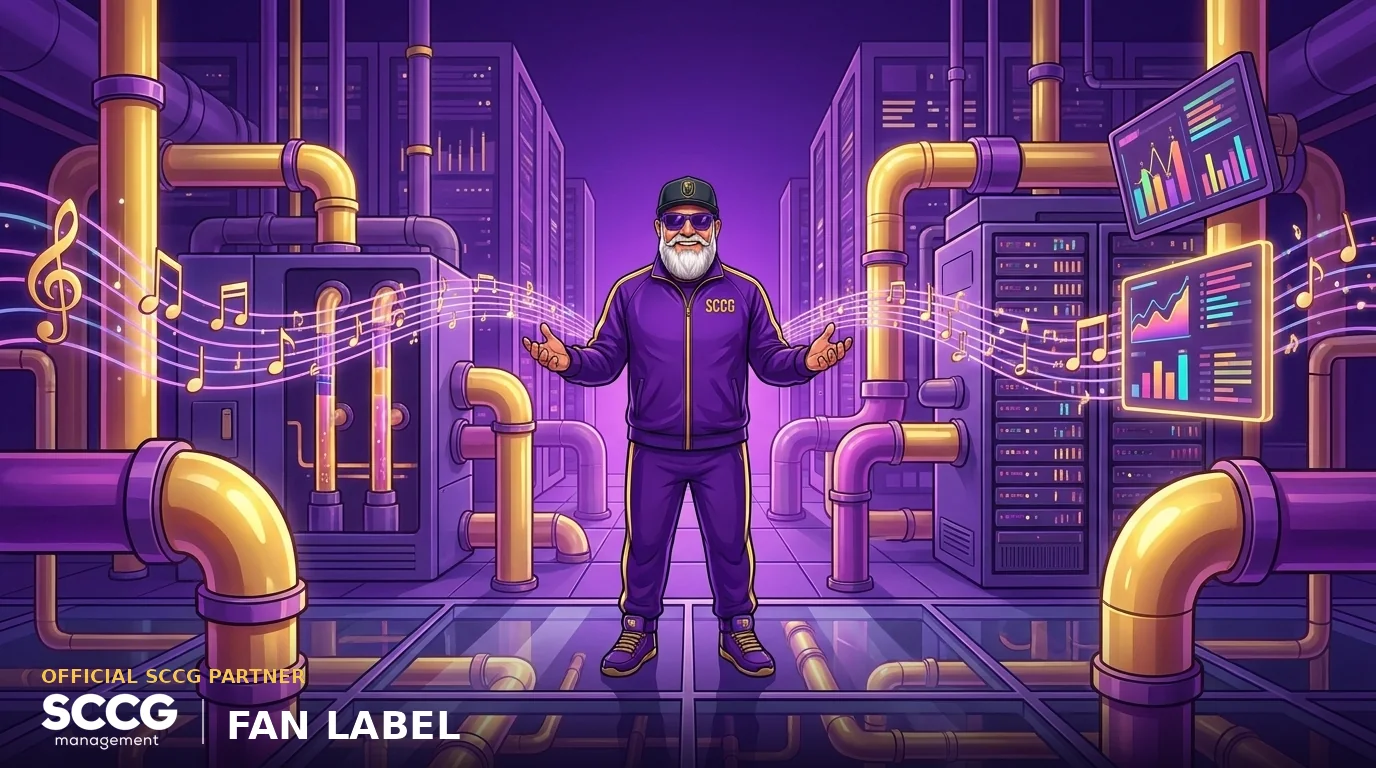
Every few years a category shows up that does not fit the existing boxes, and the people who notice it early are usually the ones watching the plumbing instead of the headlines. Music prediction markets are that category right now. A recent milestone at FanLabel is a good place to explain why I decided to put my own capital behind it.
First, the disclosure, because I have always believed transparency reads as strength and not as a footnote to bury. I am an investor in and an advisor to FanLabel. Through SCCG’s advisory engagement I hold a small direct stake in Fan Label, the parent company, and a larger common interest in its Music Markets subsidiary, where I also serve as one of the managers. I am not a neutral observer here. I am a participant who believes the thesis enough to be on the cap table.
The milestone I am spotlighting
In a recent interview with NXTNOW Music, FanLabel founder and CEO Jeff Sloan and Tuned Global co-founder and managing director Con Raso walked through something most companies never talk about in public: the backend. Since 2021, FanLabel’s music ingestion, delivery, and royalty reporting have run on infrastructure from Tuned Global, a business that has supported more than 40 companies across more than 70 countries since 2011. When FanLabel needed to migrate its catalogue operation, Tuned Global moved it onto its INTAGA ingestion and delivery system in roughly ten days.
To be clear, SCCG had no hand in that partnership. It predates our engagement and belongs entirely to the FanLabel and Tuned Global teams. I am spotlighting it because infrastructure is the tell. A ten-day migration onto an institutional-grade content pipeline is not a marketing story. It is the sign of a company that has decided to be taken seriously at scale, and it is exactly the kind of unglamorous groundwork that separates a durable platform from a clever app.
Three products, one idea
That groundwork now supports three products built around a single insight, that fans hold real conviction about music long before the charts confirm it.
FanLabel Classic is the free entry point, a music-discovery competition where fans compete on their picks. SongPicks is the paid, skill-based tier, where players rank songs and predict streaming performance for cash prizes. As Sloan put it in the interview, “SongPicks captures a kind of conviction that usually disappears before it can be measured.” That line is the whole thesis in one sentence. Human beings form strong, early opinions about what will break out, and almost none of that judgment is ever captured, priced, or rewarded.
The third product is the one I find most interesting, and the one I will be most careful about describing. Music Markets is a prediction-market layer that FanLabel is building, developed under the CFTC prediction-market framework. I want to be precise, because precision matters in anything that touches regulated markets. Music Markets is being built, not launched. It is a platform under construction, not an approved or operating product, and nothing here should be read as a live or cleared offering today. What exists is a serious engineering and legal effort to turn musical conviction into a regulated, tradable signal. That is the part worth watching.
Why the category matters
Prediction markets are, at their core, an information technology. They take scattered, private belief and turn it into a public price. We have watched that mechanism move from politics into sports and into culture, and each time the same thing happens: an audience that was already forming opinions gets a structured, honest way to express them.
Music is an unusually good fit for that mechanism. It is emotional, high-frequency, global, and endlessly debated. The gap between what fans believe early and what the data eventually proves is wide, persistent, and, until now, uncaptured. Close that gap responsibly, inside a regulated framework, and you have created a genuinely new asset class sitting on top of the world’s most engaged audiences. That convergence of music, gaming mechanics, and regulated market structure is precisely the seam SCCG was built to work, and it is why I chose to be invested rather than merely interested.
The forward view
I am realistic about the road. Regulated markets reward patience, correct sequencing, and doing the boring things right before the exciting things arrive. FanLabel’s decision to build on institutional infrastructure first, and to develop its market layer deliberately rather than rush it, is the behavior of a team that intends to still be standing when this category matures.
I put my capital where my conviction is. On music prediction markets, my conviction is that the category is real, that it will be built by the companies that respect the plumbing and the rulebook, and that FanLabel is positioning itself to be one of them. I intend to help it get there.
Disclosure: Stephen A. Crystal and SCCG Management hold equity interests in Fan Label and in its Music Markets subsidiary, and Mr. Crystal serves as a manager of the subsidiary. This article reflects his own point of view on the music prediction-market category.
FanLabel is building the music prediction category on real plumbing, and I put my own money behind it.
We backed FanLabel because it is solving a problem most platforms ignore: how do you ingest, distribute, and report on music inside a prediction market at scale? The infrastructure milestone with Tuned Global proves the category is past proof-of-concept. This is where music, gaming, and prediction markets stop being a panel topic and start being a regulated business.
- FanLabel runs music ingestion and royalty reporting on Tuned Global infrastructure since 2021
- Steve Crystal is an investor and advisor with direct stake in Fan Label and Music Markets
- Music prediction markets now have scalable backend infrastructure, moving past concept stage
SCCG angle: We are connecting FanLabel to the right distribution, licensing, and regulatory partners across our network because music prediction markets need more than tech — they need category credibility, compliance infrastructure, and the right introductions to scale in regulated states. That is what we do.
Gaming, betting and prediction markets — the desk’s read, every weekday.
Subscribe →