New York Judge’s Kalshi Gambling Ruling Challenges CFTC Preemption and Tribal Sovereignty

A New York judge ruled Kalshi’s event contracts constitute gambling, challenging CFTC approval. The decision tests federal preemption against state authority and raises direct implications for tribal sovereignty in prediction markets. Operators face heightened multi-jurisdictional risk.
SCCG Take — This ruling demands explicit integration of tribal sovereignty into any CFTC framework. Client-partners should model scenarios where state compacts and federal preemption collide, prioritizing structured federal-tribal dialogue.
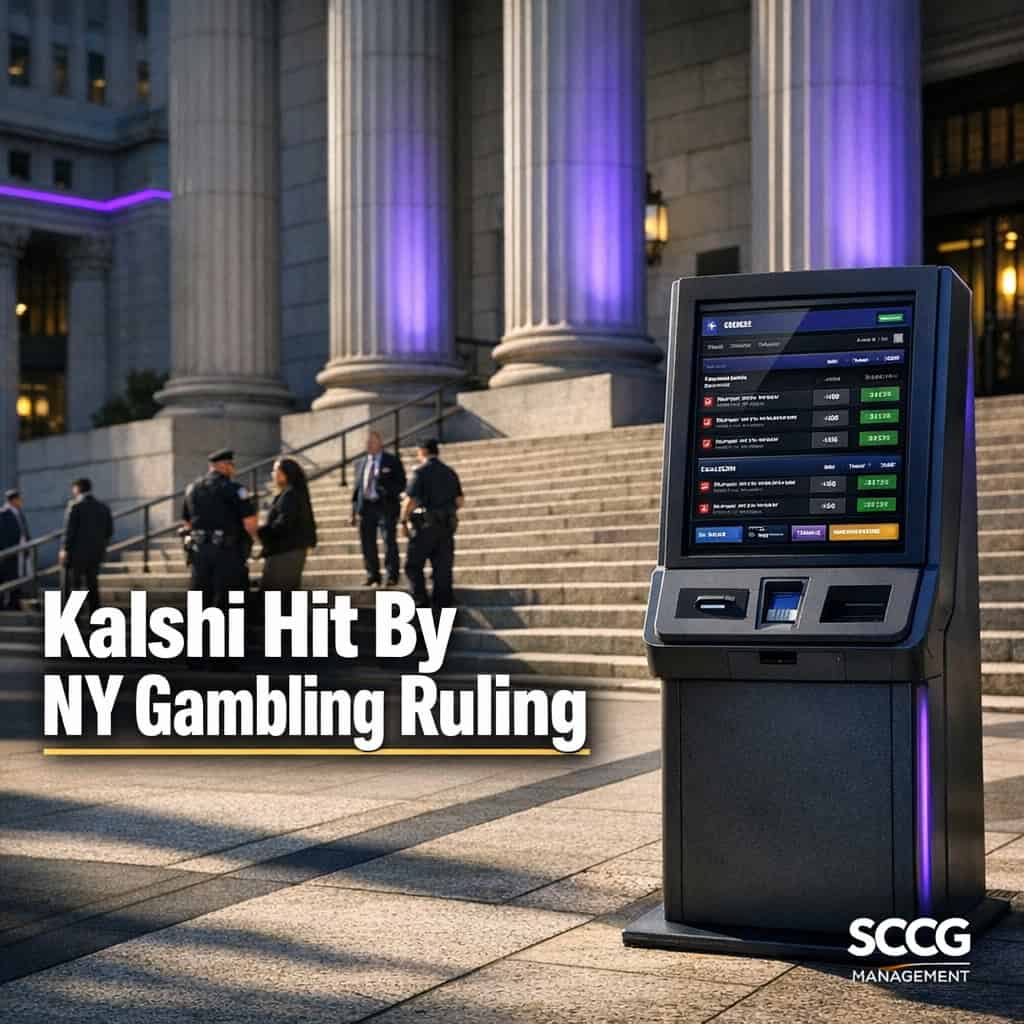
Can a New York Judge’s Gambling Ruling on Kalshi Undermine CFTC Preemption and Tribal Sovereignty?
What Happens When a State Court Reclassifies CFTC-Approved Event Contracts as Gambling?
A New York judge has dealt Kalshi a massive blow by classifying its prediction market contracts as gambling. The decision directly challenges the federal foundation that has allowed these platforms to operate across state lines. This single ruling raises urgent questions about regulatory boundaries in an industry built on the premise that event contracts differ from traditional bets.
According to reporting by AOL, the court’s finding treats Kalshi’s offerings as falling under New York gambling prohibitions. The move creates immediate friction with the Commodity Futures Trading Commission’s framework for these products. For an industry at an inflection point, the stakes involve more than one company’s operations.
How the Ruling Tests CFTC Preemption
The classification strikes at the heart of CFTC preemption. Federal approval of event contracts has historically shielded platforms from patchwork state gambling laws. If courts begin to view these instruments as gambling, operators face the prospect of simultaneous federal permission and state prohibition.
This tension does not resolve cleanly. Client-partners in the space must now weigh compliance costs that could multiply across jurisdictions. The ruling signals that preemption may prove less robust than many assumed when building national prediction market strategies.
State Compacts and the Fragmentation Risk
State authority stands to gain ground. Compacts designed to allocate gambling rights and revenues could face new pressure if event contracts are deemed gambling. States may assert tighter controls, potentially disrupting the balanced approach that has allowed innovation while preserving sovereign interests.
The decision highlights a structural shift. What began as a federal experiment in information markets now collides with long-standing state gaming frameworks. Operators and investors should anticipate renewed legislative activity as states seek to protect their compact-based regimes.
Tribal Sovereignty Enters the Equation
Tribal governments hold a distinct position in this debate. Sovereignty is the foundation, not a footnote, when federal and state rules diverge on prediction markets. The New York ruling could complicate tribal efforts to engage these markets on their own terms, outside the constraints of state gambling compacts.
Tribes have watched the CFTC dialogue closely. A judicial reclassification risks eroding the federal pathways that respect tribal authority. Any path forward must address this dimension explicitly rather than treating it as an afterthought.
Where the Risk Lies
The primary risk is regulatory fragmentation that slows legitimate innovation while pushing activity toward less accountable channels. Kalshi’s setback may embolden additional state challenges, creating uncertainty that deters capital and complicates compliance planning. Counterarguments suggest the ruling applies narrowly to New York facts and may not survive appeal or broader federal review.
Yet the limitation is clear. Without clearer boundaries between CFTC event contracts and state gambling definitions, the convergence of prediction markets with sports, media, and information verticals faces unnecessary friction. This is not abstract legal theory. It is a commercial planning input that client-partners must address now.
The Sovereignty Imperative Ahead
This ruling marks a defining moment for how prediction markets navigate federalism. The industry should watch for appeals, CFTC responses, and any signals on tribal consultation. Clarity that respects both federal oversight and sovereign rights will determine whether these markets deliver on their promise or remain stalled in litigation.
The path forward lies in constructive dialogue that integrates all stakeholders. Operators, investors, and regulators who treat this decision as a prompt for precision rather than paralysis will be best positioned as the framework evolves.
Reporting: Kalshi dealt massive blow by judge in New York gambling case – aol.com (news.google.com)
When state courts redefine federally approved contracts as gambling, the entire regulatory stack—CFTC, tribes, compacts—gets scrambled.
We've watched prediction markets grow for years, but this ruling cracks open the question no one wanted to face: can states overrule the CFTC? More urgent for us—tribal compacts are built on exclusive gaming rights. If event contracts are suddenly gambling, tribes have standing to challenge or demand participation. Multi-jurisdictional chaos just became real.
- New York court reclassifies CFTC-approved Kalshi event contracts as gambling under state law
- Ruling tests federal preemption limits and creates new risk layer for operators in multiple states
- Tribal gaming exclusivity clauses may be triggered if prediction markets qualify as gambling
SCCG angle: SCCG has deep relationships across tribal leadership and state regulators in every active market. We're already mapping which compacts have language vulnerable to this interpretation and connecting clients to the counsel and tribal partners who can navigate federal-state-tribal collision points before they become crises.
Gaming, betting and prediction markets — the desk’s read, every weekday.
Subscribe →