BREAKING: Lula Bans Online Betting in Brazil; Deposits Barred Now, Platforms Offline 6 October
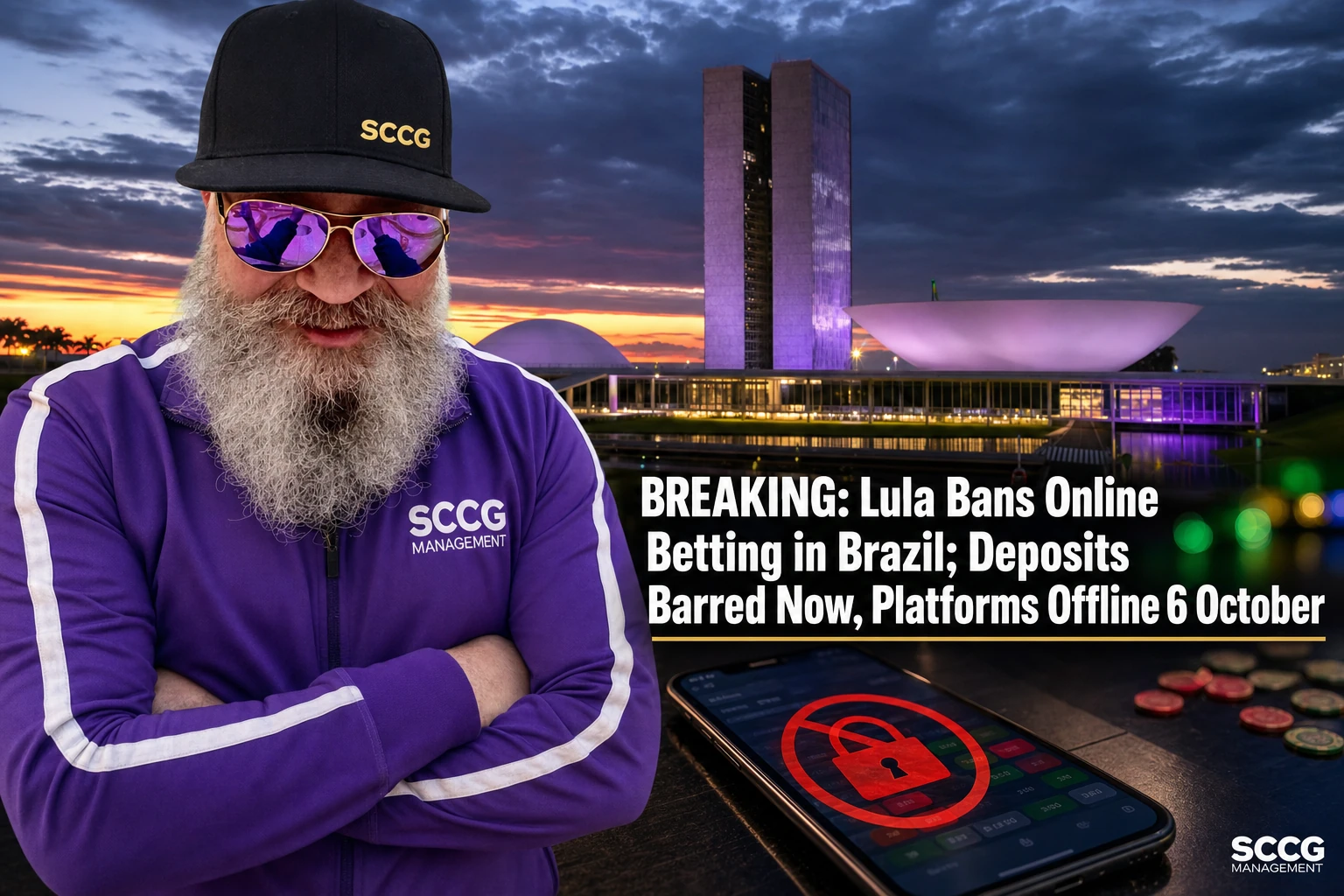
Breaking · Developing story
Last updated: Friday 25 September 2026, 19:15 Brasília time (Saturday 26 September, 01:15 EEST). This story will be updated as the published text of the measure and further reaction become available.
Leia em português → · Lea en español →
President Lula has signed a provisional measure ending Brazil’s licensed online sports betting and online casino market. New deposits are barred from publication, players have until 23:59 on 5 October to withdraw, and platforms must go offline at midnight on 6 October.
Brazil’s government has moved to close the regulated online betting market it opened less than two years ago. President Luiz Inácio Lula da Silva signed a provisional measure (medida provisória, or MP) in São Paulo on Friday afternoon, 25 September, prohibiting fixed-odds sports betting and online casino games across the country, Metrópoles and InfoMoney report. The government said the MP would be published in an extra edition of the Diário Oficial da União the same day. The announcement comes nine days before Brazil’s general election on 4 October.
Finance Minister Dario Durigan set out the immediate effect:
“From today, money can no longer be put into betting sites in the country. The sites will remain available for people, for bettors, to withdraw their remaining balance until 23:59 on 5 October.”
— Dario Durigan, Minister of Finance, quoted by Metrópoles
“From the publication of this provisional measure,” he added, the accounts through which betting platforms receive players’ money “will no longer accept any new deposit.”
The timetable
- From publication (25 September): new deposits prohibited. No new advertising contracts may be signed.
- Until 23:59 on 5 October: players may withdraw their balances. Platforms stay online for withdrawals only. Existing advertising and sponsorship must come down.
- From 00:00 on 6 October: betting sites and apps must go offline in Brazil. Betting, advertising and sponsorship end.
- 7–8 October: operators report each customer’s remaining balance, CPF (tax ID) and originating bank account to the banks.
- 9–14 October: remaining balances are returned to customers’ original accounts.
- From 14 October: Caixa Econômica Federal takes over the return of any funds that could not be repaid.
Sources for the timetable: InfoMoney, Times Brasil, Metrópoles.
What is covered
The measure targets the licensed online market: fixed-odds sports betting and online casino games. Land-based casinos and bingo were already illegal in Brazil. Reporting so far does not say whether federal or state lotteries, or horse racing, are affected. That will depend on the published text.
Enforcement and penalties
Bank transfers to company registrations (CNPJs) linked to online betting are prohibited, and accounts used for illegal operations may be blocked, according to InfoMoney. Earlier on Friday the Ministry of Justice ordered the removal of 1,367 pages and profiles linked to irregular betting.
Criminal penalties are in a separate bill (projeto de lei) sent to Congress alongside the MP, not in the MP itself. InfoMoney reports four to six years’ imprisonment for operating or promoting betting, two to four years for advertising it, and heavier penalties for virtual games; JOTA reports the package allows sentences of up to eight years. None of those penalties applies unless Congress passes the bill.
Lula: “a decision, not a war”
Lula signalled the move two days earlier, at an event with artists in Rio de Janeiro on Wednesday, 23 September, responding to football club directors opposed to restrictions:
“I have no problem saying it. I will take immense pleasure in putting an end to the bets.”
“My concern is that today part of our young people are tied to algorithms.”
“This is not a war. It is a decision.”
— President Luiz Inácio Lula da Silva, quoted by Preto no Branco
Reaction
The opposition. Senator Flávio Bolsonaro (PL), Lula’s rival in the presidential race, called the measure “hypocritical, electioneering and populist” and called Lula “the father of the Tigrinho,” a reference to the online slot game that became a byword for the market, Metrópoles reports. Bolsonaro has himself promised to ban online betting and the “tigrinho” game.
The industry. Bernardo Freire, a consultant to the national gaming and lotteries association ANJL, warned that operators licensed by this same government can sue for their losses:
“The cost to the public purse could reach R$120 billion. Companies can sue the Union for their losses, since the market was regulated and the authorisations were granted by the current government, for a term of five years.”
— Bernardo Freire, ANJL, quoted by BNLData
The Brazilian Institute for Responsible Gaming (IBJR), whose president is Carlos Lima, called the measure an abrupt rupture that creates legal uncertainty for companies that invested in the country and favours only the illegal market, and said the sector is preparing to go to court, Metrópoles reports. Licensed operators each paid a R$30 million licence fee, and are expected to seek its return plus compensation for their investments.
Eight organisations, including Livre Mercado and Instituto Liberdade, published a manifesto arguing that a change of this size should go through Congress, reported by CNN Brasil:
“A change of this dimension should go through the National Congress, with an impact assessment and transition rules.”
— Manifesto signed by eight organisations, quoted by CNN Brasil
The manifesto warns that players will move to illegal sites, noting that “more than 66,000 illegal sites were blocked in the first year” of the regulated market.
Football and broadcasting. Betting companies are among Brazilian football’s largest sponsors. Operators have notified clubs and are preparing legal action, and TV broadcasters have raised concerns about lost revenue and job cuts. Flamengo came out in support of the regulated betting sector on Friday.
What happens next
A provisional measure has the force of law from publication, but the National Congress must approve it within 120 days for it to become permanent. If it does not, the MP lapses. With the election on 4 October and the withdrawal window closing the following night, the market’s shutdown is scheduled to begin before Congress can vote on it.
The MP’s number and full text were not yet widely circulated at the time of writing. Operators should confirm the detail against the published text and any notice from the Finance Ministry’s Secretaria de Prêmios e Apostas before acting.
SCCG Management advises operators, suppliers and investors across Latin America. If you have customers, contracts or sponsorships exposed to Brazil’s 6 October deadline, talk to us.
Sources. Quotations are translated from Portuguese by SCCG. Originals, as published:
- Dario Durigan: “A partir de hoje não se pode colocar mais dinheiro nos sites de apostas do país. Os sites ficarão disponíveis para as pessoas, para os apostadores, fazerem o resgate do saldo remanescente até as 23h59 do dia 5 de outubro.” Metrópoles, 25 September 2026.
- Lula: “Eu não tenho nenhum problema em dizer. Eu terei o imenso prazer de acabar com as bets”; “A minha preocupação é que hoje tem uma parte da juventude atrelada aos algoritmos”; “Essa não é uma guerra, é uma decisão.” Preto no Branco, 24 September 2026.
- Flávio Bolsonaro: “hipócrita, eleitoreira e populista”; “o pai do Tigrinho.” Metrópoles, 25 September 2026.
- Bernardo Freire (ANJL): “o custo para os cofres públicos pode chegar a R$ 120 bilhões”; “as empresas podem processar a União pelos prejuízos, já que o mercado foi regulamentado e as autorizações foram concedidas pelo atual governo, com prazo de cinco anos.” BNLData, 25 September 2026.
- Manifesto: “a mudança dessa dimensão passe pelo Congresso Nacional, com avaliação de impacto e regras de transição”; “mais de 66 mil sites ilegais foram bloqueados no primeiro ano.” CNN Brasil, 25 September 2026.
- Timetable, enforcement and penalties: InfoMoney; Times Brasil; JOTA; iGaming Brazil.
- IBJR and industry reaction: Metrópoles; SBC Notícias; SBC Notícias; iGaming Brazil; BNLData.
Gaming, betting and prediction markets — the desk’s read, every weekday.
Subscribe →