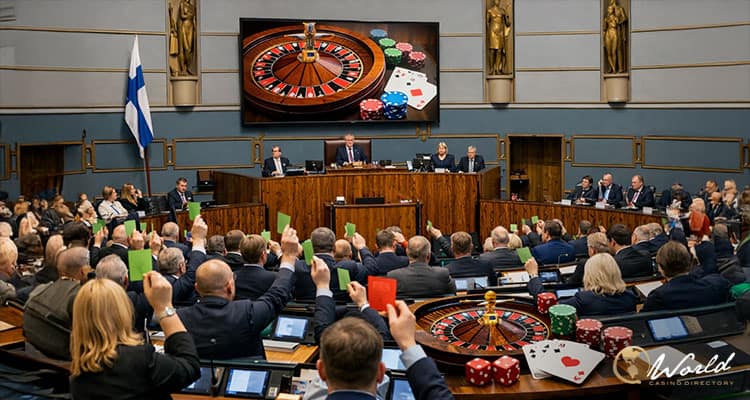
Finland’s parliament has approved sweeping changes to the country’s gambling legislation, formally ending the long-standing online monopoly held by state-owned Veikkaus and setting the stage for a partially competitive market to launch in 2027. The reform, passed at second reading by an overwhelming majority of lawmakers, represents a major restructuring of how gambling is regulated, marketed, and supervised in the country.
Under the newly adopted Gambling Act, Veikkaus will lose its exclusive right to provide betting services and online slot machine and casino games in the summer of 2027. The company will, however, continue to operate lottery games, scratch cards, and physical slot machines and casino games. Other gambling companies will be able to enter the market through a licensing system, with applications opening on 1 March 2026 and licensed operations scheduled to begin on 1 July 2027. Veikkaus itself will be required to apply for licenses for its exclusive offerings and may also seek licenses to compete in the newly opened segments.
Overwhelming parliamentary support for reform
The legislation passed with 158 members of parliament voting in favor and eight against, reflecting broad political agreement that the existing system no longer aligned with current gambling behavior. During parliamentary debate, Juha Hänninen of the National Coalition Party argued that lawmakers had refined the proposal sufficiently before the final vote. He told the chamber, “The current gambling system, in which Veikkaus has exclusive rights, no longer reflects reality.”
Hänninen pointed to the scale of gambling activity taking place outside Finland’s regulated framework, adding, “A significant part of gambling takes place outside our current system, online and on the platforms of foreign operators.” According to him, these offshore operators pay no fees or taxes to Finland and carry no responsibility for addressing gambling-related harm among Finnish players.
Opposition parties broadly supported the bill despite unsuccessfully proposing amendments that would have imposed stricter limits on advertising, bonuses, and sponsorships. Members of The Greens and the Left Alliance raised concerns about marketing, particularly its social impact. Aino-Kaisa Pekonen of the Left Alliance warned MPs, “Advertising normalizes and makes gambling a commonplace. It also increases a positive attitude towards gambling and encourages gambling.” She continued, “This increases the consumption of gambling and the harms it causes. Advertising increases gambling and risk-taking among gambling addicts. It makes it more difficult to abstain from gambling and causes relapses.”
Despite these objections, the amendments were rejected, and the bill proceeded largely as drafted, with the market launch date moved from January to July 2027.
Licensing model and new supervisory authority
The reform introduces a license-based system intended to bring both domestic and foreign operators under the same regulatory standards. Supervision of gambling will transfer from the National Police Board to a newly created Licensing and Supervisory Authority, consolidating oversight responsibilities under a single body. License holders will be required to ensure that their services minimize gambling-related harm, and gambling will require player identification.
Marketing rules formed one of the most debated elements of the reform. After constitutional scrutiny, lawmakers narrowed and clarified the permitted scope of advertising. Promotion will largely be limited to operators’ own channels, influencer marketing is explicitly banned, and advertising must not target or be likely to reach minors. Gambling also cannot be presented as a routine part of everyday life or as a way to improve financial standing. Search engine marketing will be allowed, based on the view that it primarily reaches individuals actively seeking gambling-related information.
Industry reaction and expectations
Veikkaus has openly supported dismantling its own monopoly, citing declining channelization rates as players increasingly turn to offshore sites. Deputy CEO Velipekka Nummikoski said, “We have been waiting for a model that improves the possibilities of channeling gambling into a licensed offering.” He added, “Veikkaus has not had a real monopoly on gambling in Finland for a long time. According to various estimates, up to 600–900 million euros are gambled outside the official system annually.”
Nummikoski has also emphasized the need to make the licensing regime attractive while effectively addressing unlicensed operators. Without effective enforcement, he warned, achieving harm reduction goals could become more difficult.
Other industry figures welcomed the vote. Antti Koivula of Hippos ATG highlighted the scale of parliamentary backing, writing on LinkedIn, “The Finnish Parliament has approved the Gambling Reform Bill by a landslide.” He also noted the unusually high approval rate among opposition MPs.
Consultants and technology providers described Finland as a compelling market under the new rules. In a blog post, Jari Vähänen of Finnish Gambling Consultants Oy observed, “Finns spend more money on gambling per capita than most countries. I don’t know Finland’s exact ranking on that statistic at the moment, but we have been among the top three countries and are likely still in the top 10.”
With the legislative phase complete and presidential approval pending, attention now shifts to implementation. Regulators and lawmakers have committed to closely monitoring channelization, marketing practices, and enforcement capacity once the market opens. While the reform marks a decisive shift away from monopoly control, political debate over advertising and harm prevention suggests that Finland’s gambling framework may continue to evolve after 2027.
- SCCG Management. The Gambling Industry’s Global Connector. Access Here.
- Source: https://news.worldcasinodirectory.com/finnish-parliament-clears-path-for-licensed-gambling-market-120982