NEXTPredict New York, Day 2: The Courts, the Midterms and a $1.5 Trillion Market

The second and final day of NEXTPredict Summit New York opened on Friday 23 October with the industry’s biggest legal question, the fight between the states and the federal government over sports event contracts, and then turned to the midterm elections, now less than two weeks away. In between, Bank of America put a number on how fast this market has grown, and it was bigger than almost anyone in the room expected.
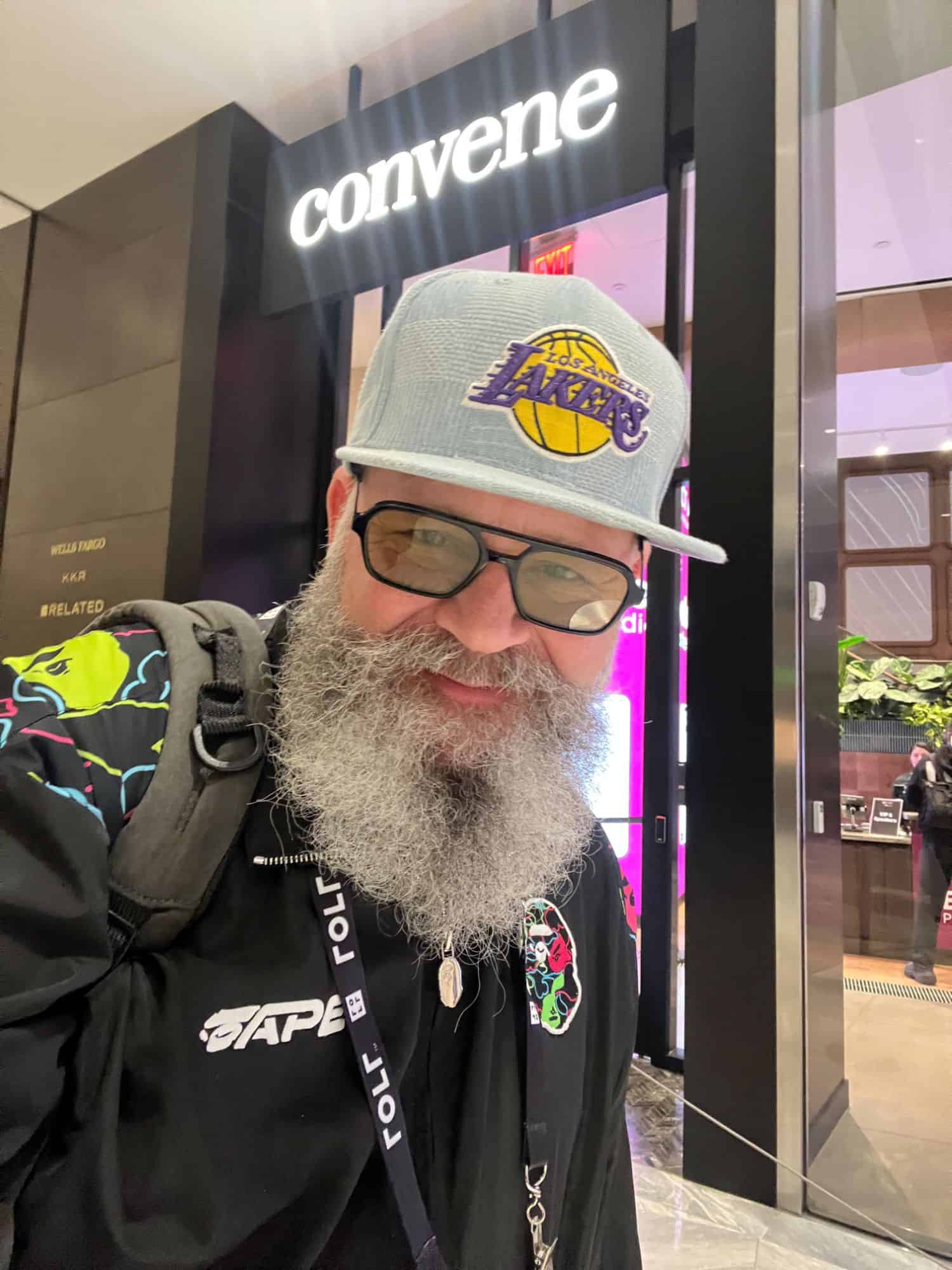
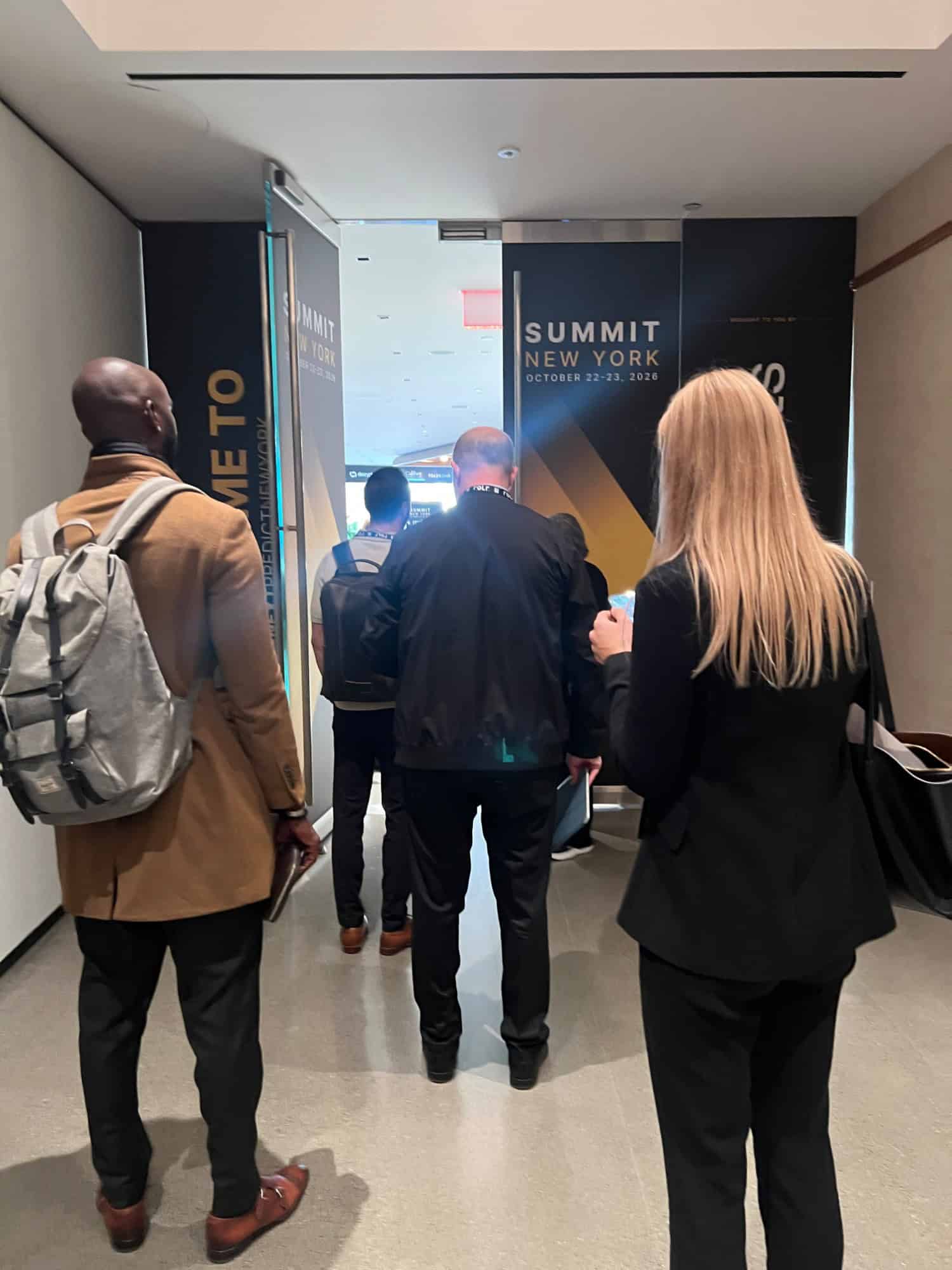
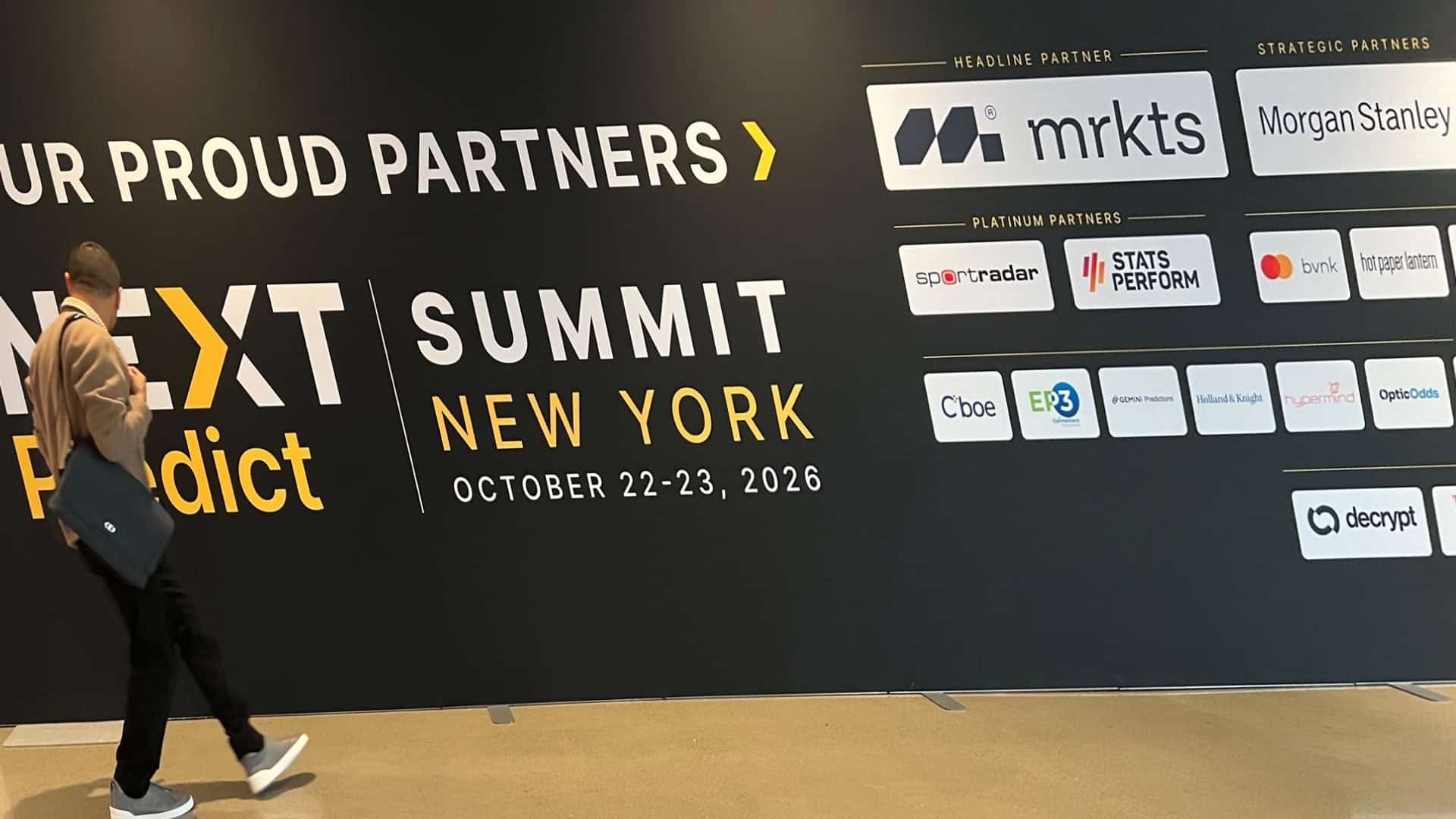
SCCG Founder and CEO Stephen Crystal attended both days at Convene, Hudson Yards, meeting clients, partners and new contacts. You can read our Day 1 recap here.
The courts: one regulator or fifty?
The morning’s opening panel, “The Jurisdiction Gap”, set out both sides of the fight over who regulates sports event contracts, with a Supreme Court ruling expected.
Kalshi’s head of litigation, Jovy Dedaj, said the company has been caught between state courts and the CFTC. Kalshi complied with a state court order in Michigan to unwind open positions, he said, and was then told by the CFTC that it should not have. In New York, the CFTC told Kalshi not to comply before a judge had ruled. Whatever the Supreme Court decides, he said, “complying with one federal regulator and 50 different state regulators is just not possible.”
Milbank partner Josh Sterling, a former CFTC official, said he has “a pretty high confidence interval” that the fight will end in a single federal answer, combining CFTC rules, case law and eventually federal legislation, possibly with room for state taxes. “What’s really driving it is money,” he said. “If there’s enough money at stake, people usually come to reasonable solutions at the end.”
Bill Pascrell III of Princeton Public Affairs Group took the other view. If the Supreme Court upholds the Third Circuit’s ruling in Kalshi’s favour, he warned, state gaming regulators are “in jeopardy of losing their jobs”, because operators will move beyond sports into event contracts on casino games. He urged regulators to find “an elegant solution”, pointing to New Jersey, where a bill to ban or regulate event contracts was redrafted to tax them instead. He also predicted that sweepstakes will be the next debate, after 32 states banned them in the last 18 months.
The money: $28bn in a week
Bank of America research analyst Julie Hoover said prediction markets did $28bn of volume this week, “up nearly 30 times from just a year ago today.” On an annualised basis that is $1.5tn. The bank published a $1tn market size estimate a year ago and expected it might be reached by 2030. “It’s already happened less than a year later,” she said.
→ Hoover said Kalshi controls about 75% to 80% of the US market, with Polymarket second at around 10% to 15%. Sports still make up about 80% of volume.
→ Sam Schwartz of The PM Pulse said 60% of the last 30 days’ volume came from combination contracts, which can inflate the headline numbers. Without them, Kalshi’s share falls from about 74% to about 64%.
→ Market maker Henry Kerins of Manhattan Athletic Group said every operator wants to own its own exchange, “because that’s where the fees are”, and that winning even 1% of the market now takes a celebrity-sized marketing budget.
For gaming companies, the most important session may have been Bank of America managing director Shaun Kelley’s. He said prediction markets have put publicly listed sportsbooks in a “lose-lose” position. Since September 2025, he said, Flutter’s shares are down 75% and DraftKings’ down 60%. Prediction markets came in with three structural advantages: access to all 50 states, no state gaming tax, which he called “a 30 percentage point profit advantage”, and the ability to sign up 18 to 21-year-olds. Operators that stayed out risked losing market share. Those that went in risked their state licences.
The midterms: markets, polls and security
With the elections close, the agenda then turned to politics. Host Chuck Todd said prediction markets have effectively replaced exit polls on election night, and warned viewers not to trust the exit polls this year. PredictIt CEO John Phillips said well-designed markets are “unparalleled” for forecasting, but added: “It’s called wisdom of crowds, not wisdom of whales.” Columbia University economist Rajiv Sethi cautioned that speed is “not necessarily the same as accuracy.”
Former national security official Matthew Wein said he is “really concerned” that foreign adversaries could use smaller, thinly traded markets to shape a news story in the run-up to the vote. Former US Representative Mondaire Jones said there is “a role for self-regulation, but let’s not be naive,” and predicted that legislation to restrict who can trade certain markets will gain momentum in January.
The main stage also hosted a live debate on who will control the Senate, with three traders arguing their positions with the live market on screen behind them.
The next generation
The day also crowned the winner of the NEXT Gen Traders competition. Crowds Line AI, which prices player props across four US sports leagues, won a $3m trading allocation from market maker White Swan Predicts, plus an offer of a further $3m of investment from Eagle’s View Asset Management, subject to due diligence. The two runners-up, Winworks and Shot Quality, will each be offered $1m by White Swan. The prizes are trading allocations under profit-share terms, not cash.
In the Startup Hub, Will Hall of Game Point Capital, which insures college athletic departments, teams and sponsors against costs such as player bonuses, said prediction markets are giving sports insurers a new way to offload risk. Less than 1% of sports risk worldwide is hedged, he said, “so the opportunity is still massive.”
Where to draw the line
The closing main-stage panel, “Off the Table”, asked which markets should never be listed. Former CFTC commissioner Dan Berkovitz, now at Millennium, warned that markets on everything risk undermining trust in US financial markets. “If you can bet on everything, then maybe everything’s a game. And maybe investment’s a game,” he said. “We’ve got to draw the line somewhere.” Beyond the existing bans on war, terrorism and assassination, he said he would be concerned about markets on people’s private lives. He added that there should be “no doubt” insider trading is prohibited on prediction markets, although in commodity markets the law bans trading on inside information only when it breaches a duty of confidence.
Dorothy DeWitt, former director of the CFTC’s Division of Market Oversight, warned that with the agency currently run by a single commissioner, “a commission of one means that there can be severe regulatory volatility,” and predicted “a good bit of zigging and zagging” ahead.
The deals: buy, build or wait
The afternoon’s M&A panel looked at IG Group’s purchase of Underdog, which moderator Benjie Cherniak described as the sector’s first billion-dollar deal. Sandford Loudon of investment bank Oakvale Capital said IG found that 60% of Underdog’s customers also made financial trades, and was “almost paying a sports betting multiple” with prediction markets as the upside. He expects rivals to make similar moves, and said Kalshi and Polymarket could use their high valuations to buy audiences, from daily fantasy sports brands to sports media.
Lloyd Danzig of Sharp Alpha Advisors said companies with large audiences are finding it “a lot faster to buy rather than build,” and that similar deals are being discussed “at this very conference.” His message to traditional gaming operators was direct: they “kind of got to decide around now” whether to buy into prediction markets or stay out, because “there’s probably not going to be too much more time where you have both of those choices available.”
Blackstone senior advisor Adam Rosenberg offered the counterpoint. “Sometimes the best advice for your client is to do nothing,” he said. “Perfect your business. Get more clarity. Get more certainty.”
What two days in New York told us
Two days at NEXTPredict made the same point from every direction. The legal fight is far from settled, the money is already here, and the line between gaming and prediction markets is fading faster than the rules can keep up. Sportsbooks, exchanges, regulators and investors are all making decisions now that will shape this market for years. For gaming operators in particular, the choice between buying in, building or staying out may not stay open for long.
That is why SCCG covers prediction markets every day, and why Stephen was in New York. Gaming companies know the customer. Prediction markets bring a new market structure. The businesses that understand both, and know the people on both sides, will be best placed whichever way the courts decide.
Thank you to everyone who met Stephen this week. If we did not get the chance to sit down, his diary is open next week.
Session details and quotes are from NEXT.io’s live coverage of NEXTPredict Summit New York.
Gaming, betting and prediction markets — the desk’s read, every weekday.
Subscribe →