California Tribes Urged to Engage Local Prosecutors Against Kalshi Prediction Markets
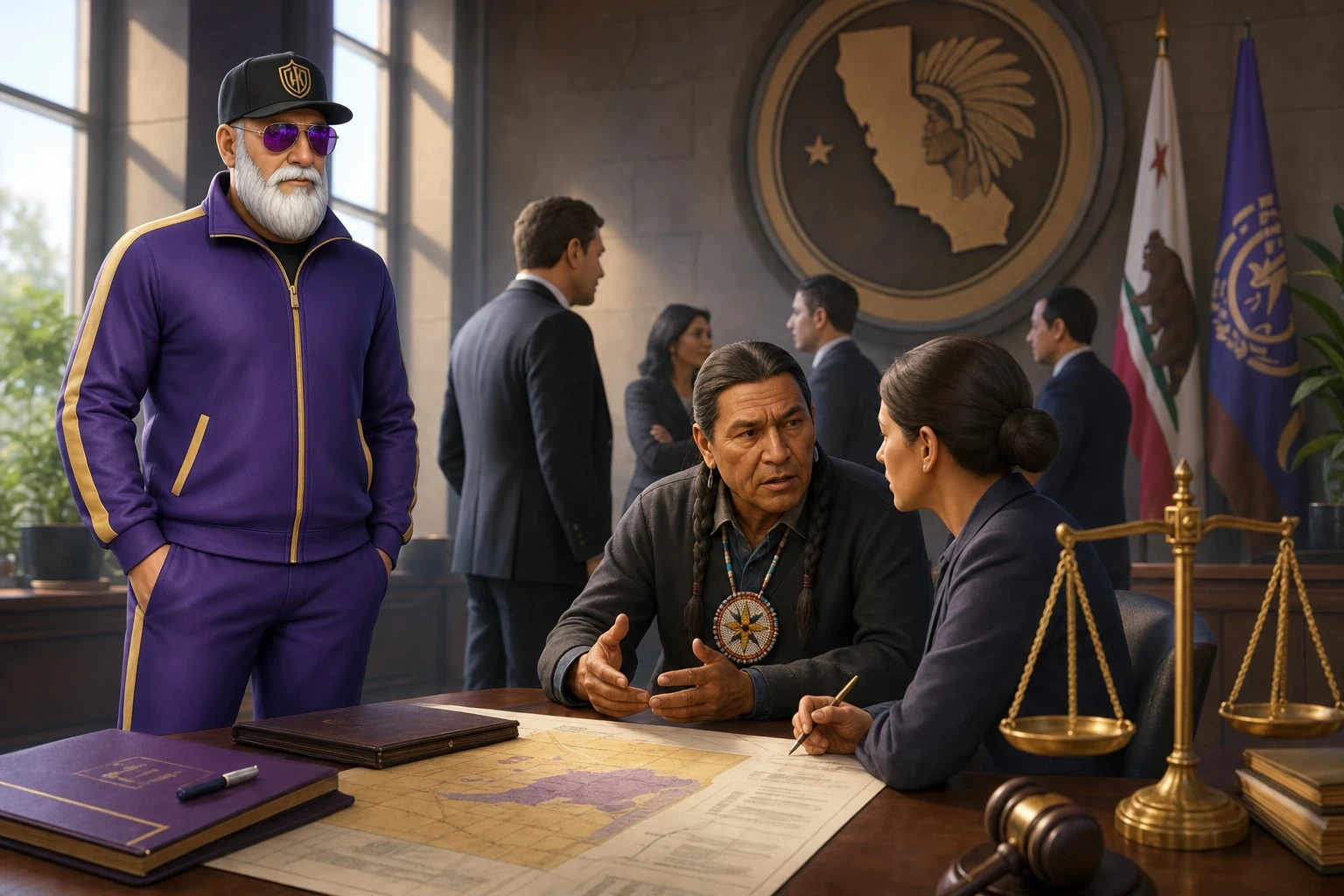
Ninth Circuit ruling grants two California tribes preliminary injunction against Kalshi for IGRA violations, following Nevada ban. Daniel Wallach expects Kalshi rehearing to fail after six losses and urges tribes to enlist local attorneys under Unfair Competition Law, as AG Bonta is unlikely to act due to conflicts. Local enforcement offers injunctive relief while awaiting Supreme Court outcome.
SCCG Take — Tribes must drive local prosecutor actions to close the state enforcement gap and obtain prompt injunctive relief under IGRA.
A federal appeals court has sided with two California tribes seeking to block prediction market contracts offered by Kalshi. The U.S. Circuit Court of Appeals in San Francisco ruled that the Blue Lake Rancheria and Chicken Ranch Rancheria deserve a preliminary injunction. The court found the tribes would likely prevail in showing that Kalshi’s sports-event contracts violate the Indian Gaming Regulatory Act (IGRA) and the tribes’ own gaming regulations.
Kalshi has sought an en banc rehearing. Gaming attorney Daniel Wallach expects the request to fail. The operator has lost before six out of six judges across related matters, including a parallel Ninth Circuit decision that upheld the Nevada Gaming Control Board’s ban on the same contracts.
Deterring Western State Enforcement
Wallach said Kalshi’s rehearing push is designed to prevent the ruling from becoming final and thereby discourage states from acting. “They’ve already lost 6 out of 6 judges, but I think the goal there for Kalshi is to disincentivize or deter some of the states out west, such as California, from pursuing any kind of civil or criminal enforcement action,” he said, as reported by CDC Gaming.
Prediction markets principally target California and Texas. Wallach noted that an unresolved ruling might keep states from following the enforcement path taken by Nevada, Washington, Maryland, and Massachusetts. He likened the current situation to California Attorney General Rob Bonta’s July 3, 2024 opinion declaring daily fantasy sports illegal under state law. That opinion produced little practical change absent follow-up enforcement.
Bonta is unlikely to pursue Kalshi, Robinhood, or Crypto.com. Wallach pointed to Bonta’s recent use of the Milbank law firm in the Paramount and Warner Brothers merger settlement—the same firm now representing Kalshi in these suits.
Filling the Enforcement Vacuum
Wallach called on tribes to move beyond amicus briefs and actively pursue cases or persuade city and county attorneys to act where Bonta has not. California’s Unfair Competition Law permits attorneys in municipalities of at least 750,000 residents—including Los Angeles, San Francisco, and San Diego—to file enforcement actions. The Los Angeles city attorney’s suit against Stake.us illustrates one model.
Such steps can deliver injunctive relief but not damages or restitution. Unlike New York, where only the attorney general holds authority, California law opens the door for local prosecutors. Wallach described California as “a very fertile ground for enforcement activity.”
Absent that intervention, tribes face more than a year of waiting for a potential U.S. Supreme Court decision. By then the prediction market operators may have withdrawn from the state anyway.
Reporting: CDC Gaming
Generated by SCCG’s automated editorial system from published source reporting. SCCG Management holds editorial responsibility.
Gaming, betting and prediction markets — the desk’s read, every weekday.
Subscribe →