DraftKings Structures Prediction Markets Exclusively in Non-Sportsbook States
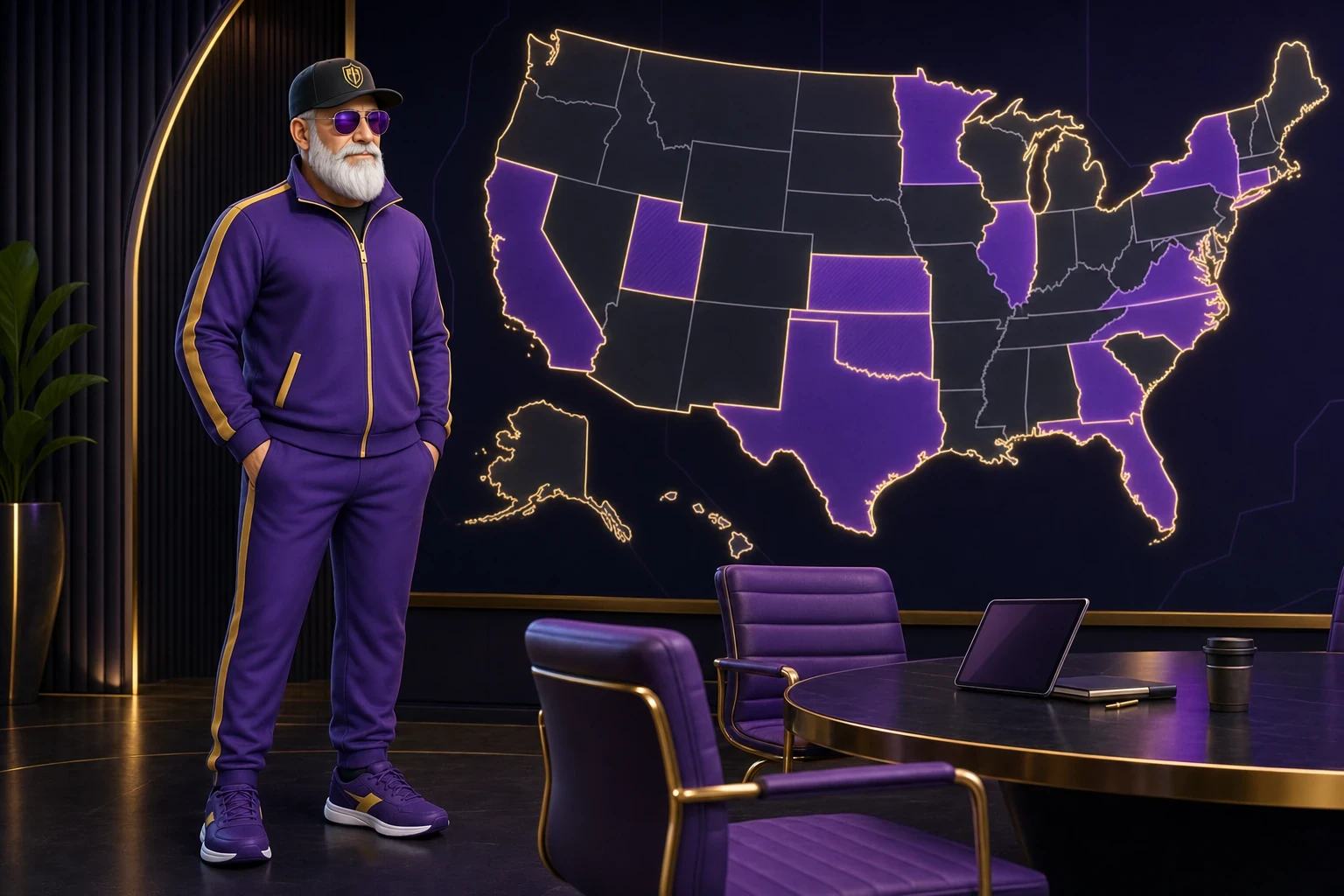
DraftKings operates prediction markets solely in 18 states without its sportsbook and sports betting in 27 others, with no state overlap. Annualized prediction volume grew from $2.3B to $11B while claiming 1% customer overlap and no discernible cannibalization. The model assumes these contracts are not sports betting, an issue now pending before the Supreme Court.
SCCG Take — The bifurcated map reduces NFL and regulatory friction yet rests on an unsettled legal distinction. A Supreme Court decision equating the products would compel operators to reassess expansion plans in unlicensed jurisdictions.
DraftKings confines its prediction market products to the 18 states where it holds no online sportsbook license. Its public availability map assigns each jurisdiction to one category only: online sports betting in 27 states plus Washington, D.C., and Puerto Rico; prediction sports markets in Alabama, Alaska, California, Delaware, Florida, Georgia, Hawaii, Idaho, Minnesota, Nebraska, New Mexico, North Dakota, Oklahoma, Rhode Island, South Carolina, South Dakota, Texas, and Utah; and free-to-play contests in the remaining five states.
Stephen Miraglia, DraftKings senior director of communications, confirmed the company does not run predictions where its sportsbook is active. The same separation appears in the firm’s June 26 announcement of its proprietary DKeX exchange and in its earnings filings. CEO Jason Robins selected the four largest non-sportsbook states for targeted promotions, emphasizing the absence of regulated alternatives.
Map Serves NFL, Regulators, and Investor Arguments
The design satisfies NFL rules that bar prediction-market ads from league broadcasts, stadiums, and partner deals. DraftKings keeps those campaigns out of NFL windows and submits all league-facing creative for approval. For investors, the company reported no discernible impact on sportsbook handle from predictions, citing 1% customer overlap in regulated states and estimating that 80% to 90% of prediction volume there comes from professional syndicates. Annualized total volume traded on predictions rose from $2.3 billion in April to $11 billion in July, with over 600,000 customers engaged with our predictions offering year-to-date.
Legal Premise Still Before the Courts
The entire map assumes that a contract on a sports outcome sold in a state without legalized betting does not qualify as sports betting. The Ninth and Third Circuits have answered that question differently. New Jersey has asked the Supreme Court to settle the conflict. Until then, DraftKings can maintain nationwide presence while telling the NFL its products stay on the approved side of the line.
A ruling that reclassifies these contracts could collapse the separation the map depends on and force operators to revisit product design across the 18 states now served only by predictions.
Reporting: Gambling Insider
Generated by SCCG’s automated editorial system from published source reporting. SCCG Management holds editorial responsibility.
Gaming, betting and prediction markets — the desk’s read, every weekday.
Subscribe →