Menominee Tribe Revises Kenosha Casino Site Plan to Address Environmental Feedback in Federal Review
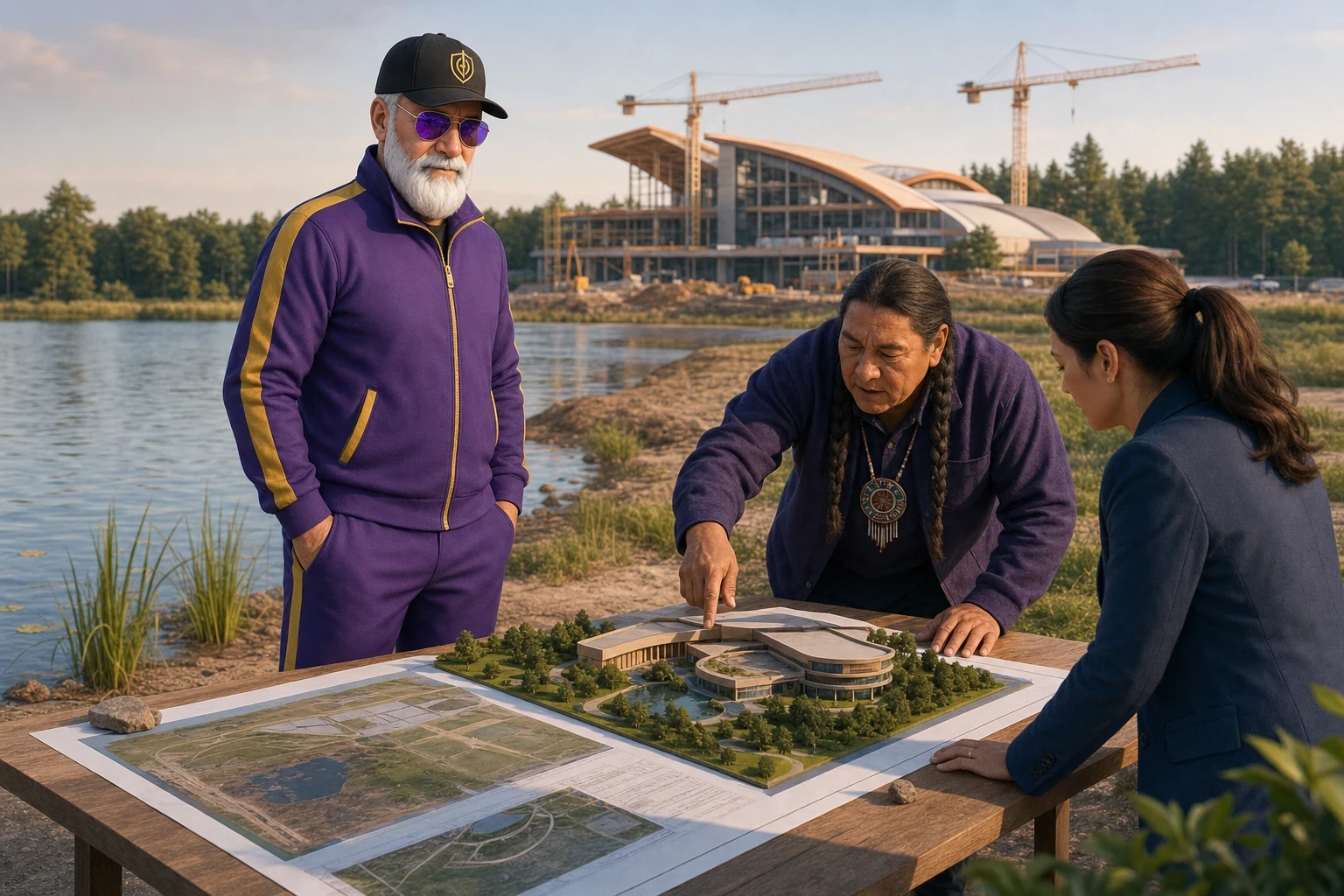
The Menominee Tribe revised its Kenosha casino site plan during federal review, moving parking west to cut paved farmland, stormwater runoff, and infrastructure needs. Parcel A shifts to water management in trust; parcel B exits the application for local taxation. The $360M Hard Rock project targets 1,000 construction jobs and over 1,000 permanent positions.
SCCG Take — Targeted revisions like these improve federal approval odds by addressing regulator and neighbor concerns while preserving core economic deliverables for the tribe and Kenosha.
The Menominee Indian Tribe of Wisconsin has submitted changes to the site plan for its proposed Kenosha casino while the project undergoes federal review. The adjustments eliminate planned parking east of the Frontage Road and consolidate it on the west side next to the casino and hotel complex. Officials describe the revisions as a direct response to input received during the review, aimed at improving environmental performance and overall site design.
Revised Layout Reduces Paved Farmland and Stormwater Demands
The changes affect two parcels previously slated for parking. Parcel A covers 5.8 acres at the northeast corner of the Frontage Road and 60th Street. Parcel B spans 10.55 acres at the southeast corner. Under the update, parcel A remains in the federal trust application but shifts to stormwater management and water retention uses. Parcel B is withdrawn from the trust application entirely and stays under local property taxes and regulations.
These steps cut the amount of farmland converted to paved surfaces. The outcome is lower stormwater runoff and reduced infrastructure needs to manage it. The tribe determined that placing all project property into federal trust is not required for the development.
Partnership Details and Projected Local Economic Gains
The Kenosha casino sits west of I-94 and north of Highway 50. It forms part of a planned $360 million investment developed with Hard Rock International on an approximately 60-acre site. The outlay includes $104 million in construction payroll and supports nearly 1,000 construction jobs across an 18-month period.
Once operational the facility is projected to employ more than 1,000 people with average annual earnings of $54,000 for full-time roles. Plans call for a 150-room Hard Rock Hotel, 1,500 slot machines, more than 50 table games, a sportsbook, a Hard Rock Cafe, six additional restaurants, and a Hard Rock Live entertainment venue. The Menominee Indian Tribe of Wisconsin will own the casino and facilities while Hard Rock oversees development and management.
Joey Awonohopay, chairman of the Menominee Indian Tribe of Wisconsin, emphasized that the proposed refinements reflect the tribe’s commitment to being a good neighbor and delivering the best possible project for Kenosha. According to reporting by GamblingNews, the tribe has sought from the outset to develop a project that benefits the community, respects the environment, and responds to legitimate feedback received throughout the review process.
Reporting: GamblingNews
Generated by SCCG’s automated editorial system from published source reporting. SCCG Management holds editorial responsibility.
Smart mid-stream pivot: tribe cuts paved farmland and keeps parcel B taxable to answer regulators and neighbors without touching core economics.
Federal land-into-trust reviews are slow, political, and sensitive to local opposition. When tribes proactively address environmental and municipal concerns before the Bureau of Indian Affairs closes the record, they shorten timelines and cut litigation risk. We watch every off-reservation tribal gaming application in the U.S., and tactical site adjustments like this matter.
- $360M Hard Rock Kenosha consolidates parking west; parcels A and B shift to stormwater and local tax rolls
- 1,000+ construction jobs, 1,000+ permanent positions at $54K average — economic case unchanged
- Mid-review revisions show tribe prioritizing neighbor relations and BIA approval speed over maximum trust acreage
SCCG angle: SCCG has direct relationships with tribes, Hard Rock, and BIA counsel across regulated markets. When land-into-trust or off-reservation compacts hit environmental or political headwinds, we connect tribes to site engineers, local government advisors, and tribal gaming operators who have closed similar deals. We help clients manage the federal review gauntlet with the right partners at the table.
Gaming, betting and prediction markets — the desk’s read, every weekday.
Subscribe →