Sri Lanka Has a Gambling Regulator That Cannot Issue a Licence
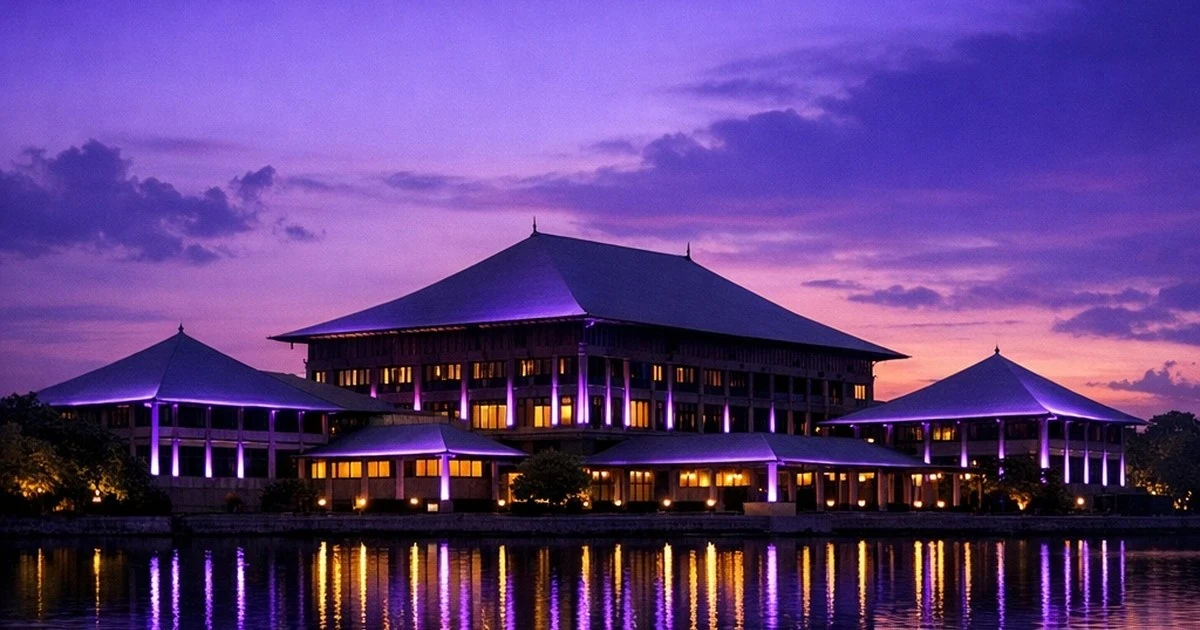
Sri Lanka now has a gambling regulator. It has a chairman, an acting director general, and enough authority to have told the country’s telecoms regulator to block 146 offshore betting sites in the first week of August. What it does not have is the power to license anybody.
That is not a criticism of the people running it. It is a description of where the law currently sits, and it is the reason two separate parliamentary committees have arrived at the same conclusion from opposite directions this year.
The Act is in force. The rules are not.
The Gambling Regulatory Authority Act, No. 17 of 2025, was certified on 3 September last year and came into operation on 1 December. It repealed the Gaming Ordinance, the Betting on Horse-Racing Ordinance and the Casino Business (Regulation) Act of 2010, and replaced them with a single licensing regime covering casinos, betting, online gambling, gaming software and junket operations.
What it did not do was bring its own subsidiary regulations with it. Licensing procedure, fee structures, online rules, anti-money-laundering controls — none of these have been gazetted. Until they are, the Authority cannot process an application, which means the licensing regime exists on paper and nowhere else.
The timetable has already slipped once. Regulations were expected by the end of June; officials have since pointed to October. The first package still has to clear the Attorney General’s Department, Cabinet, gazette and Parliament, which is a long runway for a date three months out.
This has happened before
The instructive comparison is the legislation the new Act replaced. The Casino Business (Regulation) Act was passed in 2010. Its licensing regulations did not arrive until 2022 — twelve years later — and the regulations designating casino zones never arrived at all. Operators registered provisionally in 2013 were never converted onto the newer regime.
So Sri Lanka has now written a licensing framework twice, and on the first attempt the gap between statute and operable rules ran to more than a decade. That history is the reason the current delay deserves attention rather than patience.
The lottery carve-out
The sharper problem is at the edge of the Act rather than in its middle.
Section 2 applies the Act to all forms of gambling except lotteries conducted by the Development Lotteries Board and the National Lotteries Board, and social gambling. That exemption makes obvious sense: the state lottery is a state instrument, and it does not need licensing by a regulator that reports to the same government.
But an illegal betting market has grown up on top of those draws. Known locally as Kotu Kapima, it takes wagers on the last two digits of the official winning number. It requires no draw of its own, no venue and no infrastructure beyond a way to collect stakes and pay out. It is organised informally, and it has spread from small village stakes to sums that participants describe in six figures.
The National Lotteries Board has been explicit that it can act only on matters directly related to its own operations, and has pressed for a stronger legal framework. A subcommittee of the Committee on Public Enterprises heard evidence in August describing the social harm in serious terms.
The question nobody has answered is whether an exemption written to protect the state lottery inadvertently shelters the betting market feeding off it. That is a question of statutory construction, and it is far better resolved explicitly, in the regulations, than argued case by case after a prosecution fails.
Who actually pays for the delay
It is worth being precise about who carries the cost, because it is not the offshore operators.
The Committee on Public Finance has been told that between 60 and 70 per cent of casino users in Sri Lanka now play online. The Inland Revenue Department reports no online casino operator registered with it. So the majority of the activity sits outside the tax net — not through evasion, but because there is currently no mechanism through which an operator could come inside it even if it wanted to.
Meanwhile the licensed, land-based industry pays more every year. From January the casino entrance levy doubled to 100 US dollars per entrant and the gross collection levy rose from 15 to 18 per cent. That falls on a sector that has just absorbed the largest private investment in the country’s history: over 1.2 billion dollars into the integrated resort in Colombo, developed by John Keells Holdings, with the casino operated by a Melco subsidiary under a twenty-year licence. The hotel opened in October 2024; the casino followed on 2 August 2025.
That is the constituency with the strongest interest in a functioning regulator, and the one currently getting the least from it.
Blocking is not a substitute
The August blocking order covered 146 sites and included most of the recognisable international brands. It is a legitimate enforcement step and it signals intent.
It is also hostname-level. Mirror domains appeared, and consumer VPN use is already familiar in a market that has seen platform restrictions before. Blocking suppresses casual access; it does not move a single player into a taxed, supervised environment, because there is no such environment to move them into yet. Enforcement and licensing are complementary tools, and Sri Lanka currently has only one of them.
The regional position is genuinely distinctive
This is what makes the delay frustrating rather than merely slow.
Sri Lanka is the only country in South Asia to have legislated at national level for a licensed online market rather than a prohibition. India’s Promotion and Regulation of Online Gaming Act received assent in August 2025, its rules were notified in April 2026 and took effect on 1 May, and it bans online real-money games outright. Nepal and Bangladesh prohibit and enforce. Sri Lanka chose the other road.
Choosing it first is worth something. It is worth nothing at all until the regulations are gazetted, an application can be filed, and an operator that wants to be licensed and taxed has somewhere to go.
The October window is the one to watch. If it moves again, the gap between what Sri Lanka has legislated and what it can actually administer will be approaching a year — on a framework that was written precisely because the last one took twelve.
A regulator with no licensing power is political theater, not market infrastructure — and Sri Lanka has done this before.
We've watched dozens of jurisdictions build regulatory frameworks, and this is a red flag we know well. When the gap between law and workable rules stretches twelve years — as it did with Sri Lanka's last casino act — enforcement becomes arbitrary and licensing becomes impossible. That's not a market. That's a vacuum.
- Gambling Act live since December 2024, but licensing rules still not gazetted — October now the target
- Previous casino law took 12 years to get licensing regs; some provisions never arrived at all
- Authority blocking offshore sites but can't license domestic operators or address lottery-linked illegal betting
SCCG angle: SCCG has helped clients navigate regulatory uncertainty in emerging markets across four continents. When the rulebook isn't finished, we connect operators to the officials writing it and the advisors who've actually brought licenses home in comparable jurisdictions — so you're positioned when the window opens, not scrambling after.
Gaming, betting and prediction markets — the desk’s read, every weekday.
Subscribe →