Hengqin Shifts from Farmland to Policy-Driven Cooperation Zone Aligned with Macau Diversification
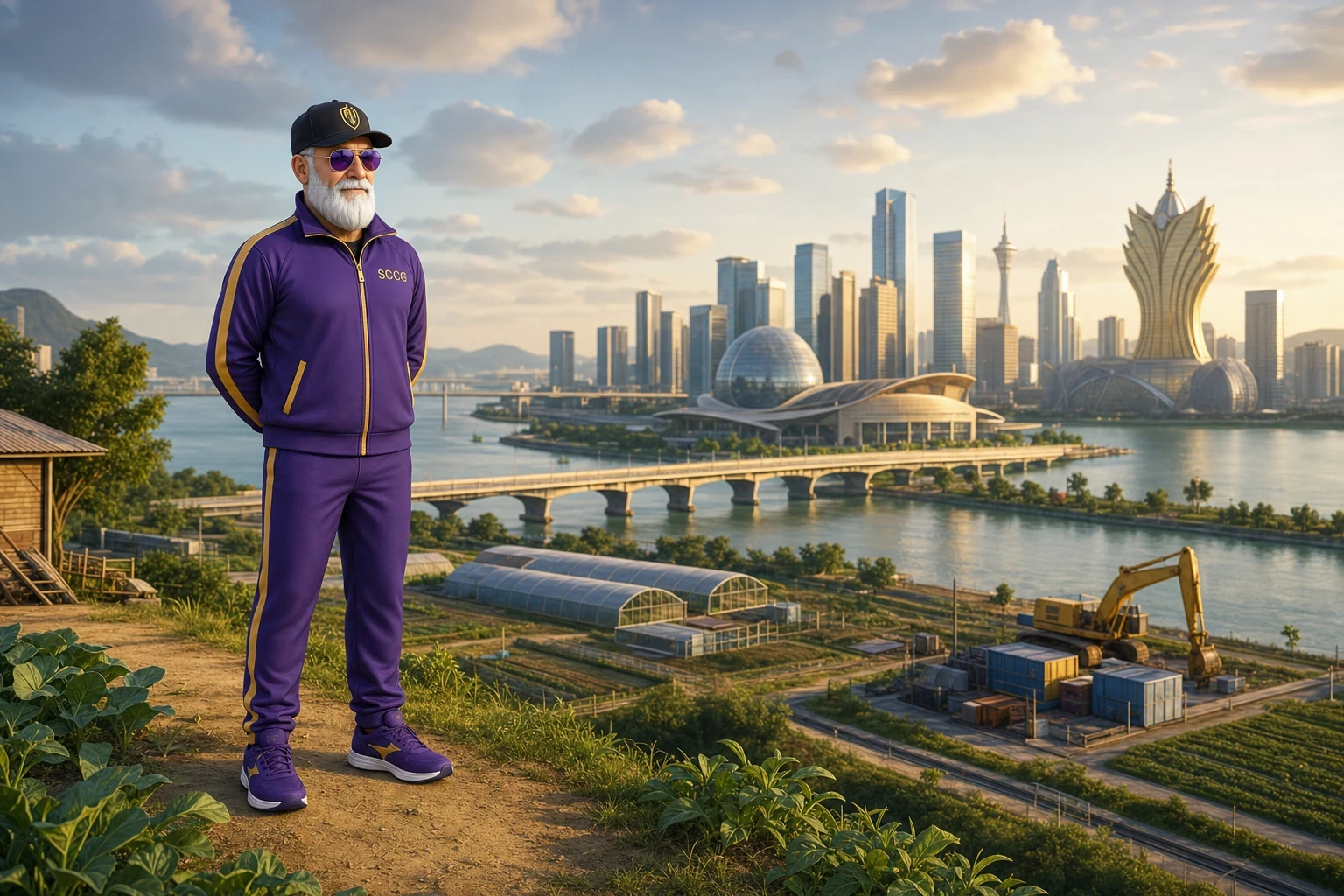
Hengqin grew from a population of 7,000 and fishing economy to 50,300 residents and RMB 28.7 billion GDP by mid-2026. The 2021 Cooperation Zone targets four industries matching Macau diversification, supported by visa, subsidy and education town policies. Real estate oversupply and institutional gaps remain key constraints.
SCCG Take — Operators should track education inflows and hotel conversions for tourism upside while monitoring regulatory harmonization. Success hinges on whether policy can generate independent industrial momentum beyond stimulus.
Macau has advanced the development of Hengqin over recent years. The island, separated from Macau by a narrow stretch of water, has moved from a remote fishing and farming area under Zhuhai jurisdiction to a platform supporting national policy and Macau’s economic diversification efforts.
Two decades ago Hengqin held a registered population of roughly 7,000. As of the first half of 2026 its permanent population reached around 50,300 and its GDP stood at RMB 28.7 billion (US$4.26 billion), a 7.5% year-on-year increase, according to reporting by Inside Asian Gaming.
Large-Scale Development and Real Estate Adjustments
Development occurred in distinct phases. In 2009 the State Council adopted the Overall Development Plan for Hengqin, incorporating the island into the Zhuhai Special Economic Zone. It was designated a demonstration zone for Guangdong-Macau-Hong Kong cooperation under One Country, Two Systems. Infrastructure projects and the new University of Macau campus followed. By 2014 Hengqin formed part of the China (Guangdong) Pilot Free Trade Zone with emphasis on Macau-related cooperation, tourism and commercial services.
Macau developers secured land. In 2012 an affiliate of Macau Legend obtained the first plot for a commercial complex of roughly 30,000 square meters. Legend Ponto Square opened in 2019. A later real estate surge saw developers market projects on policy dividends. Some rebranded commercial buildings as residential, leading to disputes over utilities, infrastructure and title deeds. The pandemic and three red lines financing policy left projects suspended. To address oversupply the Guangdong-Macau In-Depth Cooperation Zone introduced a commercial-to-hotel conversion policy in July 2024. In December 2024 SJM Holdings acquired units at Shun Tak Port Commercial Centre for RMB 546 million (US$81 million) and added roughly RMB 160 million (US$24 million) in further outlays.
Cooperation Zone Framework and Education Focus
Central authorities issued the Master Plan for the Guangdong-Macau In-Depth Cooperation Zone in 2021. The zone operates under joint consultation, construction, management and benefit-sharing between Guangdong and Macau. Sam Hou Fai, Chief Executive of the Macau SAR, has emphasized that Hengqin should be treated as Macau’s own affair. The zone targets four industries: R&D and high-end manufacturing, traditional Chinese medicine, modern finance, and culture tourism. These align with Macau’s 1+4 diversification strategy.
Cross-border measures include multiple-entry visas for zone residents from 1 January 2025 and rental subsidies up to RMB 80 per square meter per month for qualifying Macau enterprises. An education-driven new town carries total investment of roughly RMB 18 billion (US$2.67 billion) across three phases from 2025 to 2030. Phase one will relocate several Macau higher education institutions and is projected to bring more than 20,000 teachers and students.
Structural challenges persist. Commercial real estate vacancy remains high amid low permanent resident numbers. Institutional differences between mainland jurisdiction and Macau’s legal and foreign exchange systems continue to complicate capital flows and services alignment. Policy support has reshaped Hengqin’s urban and industrial base, yet sustained integration will depend on converting those advantages into self-reinforcing industry activity.
Reporting: Inside Asian Gaming
Generated by SCCG’s automated editorial system from published source reporting. SCCG Management holds editorial responsibility.
Hengqin's growth hinges on whether central mandates can drive independent industrial momentum beyond subsidy stimulus and conversion Band-Aids.
We've watched every Macau diversification chapter since the concession liberalization—this matters because Hengqin's industrial ambitions directly shape IRs' adjacent land strategy, convention flows, and the regulatory harmonization timeline operators need for cross-border products. Policy town and hotel conversions signal visible forward motion, but oversupply and institutional friction are real constraints SCCG clients must factor into multi-year capital allocation.
- Population grew from 7,000 to 50,300; GDP hit RMB 28.7 billion with 7.5% YoY growth by mid-2026
- 2021 Cooperation Zone targets four industries matching Macau diversification; 2024 policy allows commercial-to-hotel conversion
- Real estate oversupply and regulatory gaps remain—SJM's RMB 706M investment tests hotel conversion viability
SCCG angle: SCCG's Macau network—concessionaires, junket survivors, and regional advisory—positions clients to track which hotel conversions pencil, how education inflows translate to tourism lift, and when regulatory harmonization opens cross-border product adjacencies. We've been in every regulated market for three decades; we know the difference between policy theater and bankable structural change.
Gaming, betting and prediction markets — the desk’s read, every weekday.
Subscribe →