Station Casinos Is Funding Slot Machines With Apple Pay. The Architecture Is Why It Could Clear Nevada.
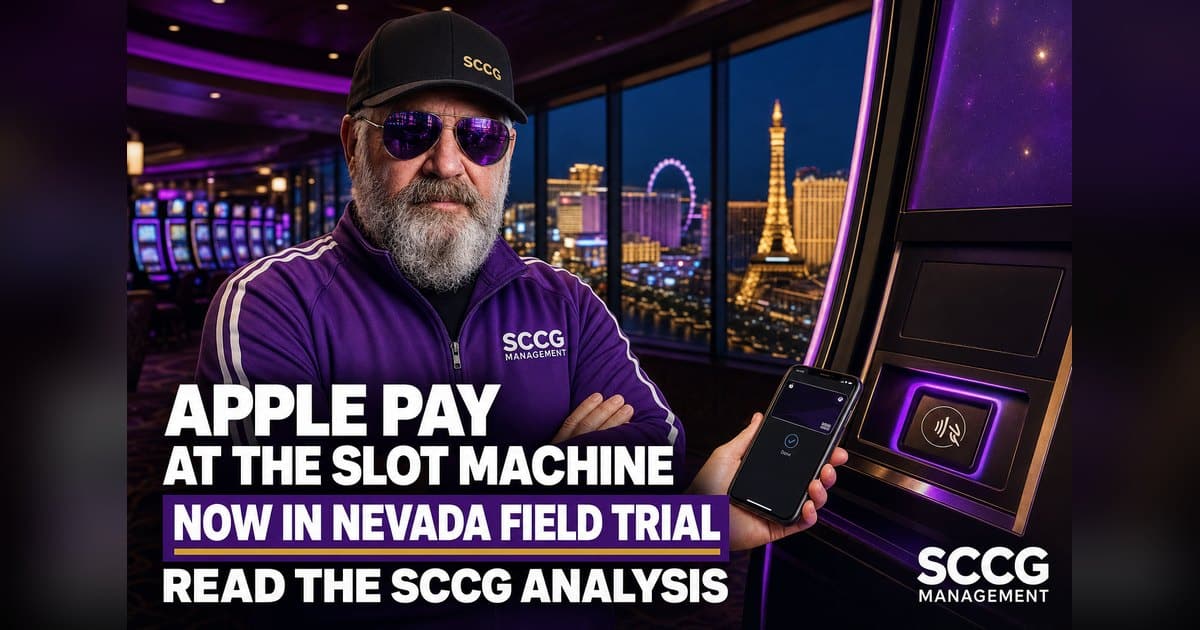
Station Casinos has begun a field trial of TrustedTap, a digital funding system built with Adostics that lets a player fund a slot machine directly from a debit card held in Apple Wallet. The player taps a placard or scans a QR code at the game, authenticates biometrically on their own phone, and plays. Remaining balance and winnings print as a standard ticket, redeemable through the same ticket-in, ticket-out process the floor already runs.
The trial is live at Durango’s casino bars, All Seventy Six taverns and Wildfire Anthem, and is pending approval by the Nevada Gaming Control Board.
Cashless funding at the game is not a new idea. It has been demonstrated, piloted and announced for the better part of a decade. What is worth attention here is not that a player can tap a phone — it is how little the operator ends up holding when they do.
What the operator actually holds
TrustedTap uses Apple Pay’s tokenization. The card number is never shared with the casino or with the machine — the operator receives a token, not a PAN. Authentication happens biometrically on the player’s own device, not on casino hardware. The value exits the transaction as a printed ticket rather than a stored balance.
Follow that through. There is no card number at rest in the operator’s environment. There is no house wallet holding player funds. There is no new credential for a player to have compromised, because the credential is the one already protecting their phone. The operator’s surface area does not grow.
Convenience was never the obstacle
This is the part of the cashless conversation the industry has consistently had backwards. For ten years the pitch has been convenience: no ATM queue, no cash on the floor, a smoother experience. Convenience was never what stalled adoption. Liability was.
Every previous architecture asked an operator to take custody of something — card data, a stored balance, a wallet — and therefore to insure a new category of loss and answer a new set of regulatory questions about it. Tokenized funding at the game inverts that. Exposure shrinks rather than grows, which is precisely why this design has a plausible path where richer wallet products have moved slowly.
Adostics chief marketing officer Brad Egnor says trial feedback has “centered on two themes: convenience and control,” with players valuing “not having to carry cash on the casino floor, which many see as both a convenience and a security benefit.”
Worth reading against it: the AXES.ai enterprise digital wallet announced with G Bank in late July. The two represent genuinely different bets about how much of the payments stack an operator should own.
Watch the regulator, not the technology
A field trial is a supervised exception, not a licence, and the terms on which Nevada converts one into the other set the template every other jurisdiction will read.
Two design choices are doing most of the work. The product rides existing rails rather than replacing them — winnings exit as a ticket, so there is no new redemption path and no change to how a cage reconciles. And the money never becomes a casino credit: the player funds a game, plays, and takes a ticket. That is a materially different regulatory object from a stored-value account or a house wallet.
The interesting variable is not whether players tap. It is whether Nevada treats funding at the game as a payments question or a gaming question. If it is the former, the approval path shortens for everyone. If it is the latter, every operator that follows will be re-litigating the ground Station is covering now.
The question to ask a vendor
For operators and tribal nations weighing cashless, the question is not what the player experience looks like. It is: after this is deployed, what sits in my environment that did not sit there before?
If the answer is a token and a ticket, the risk conversation is short. If the answer includes card data or customer balances, it is a different conversation entirely — and a longer one.
Reporting: Las Vegas Review-Journal
Cashless stalled on liability, not convenience — tokenized funding finally removes what operators feared holding: card data and balances.
We've watched cashless circle the drain for years because operators were asked to custody more risk, not less. Station launching tap-to-pay slots via Apple tokenization four months after a breach is the argument: the operator never touches the card number, never holds a wallet, never owns new liability. That changes the economics and the regulatory posture.
- Apple Pay tokenization means Station never receives card numbers — only tokens, with no PAN at rest
- Authentication is biometric on the player's device; value exits as a printed ticket, not stored balance
- Liability, not convenience, stalled cashless adoption — tokenized architecture shrinks operator exposure instead of growing it
SCCG angle: We've connected operators and regulators across cashless, digital wallets, and payments infrastructure in every U.S. jurisdiction for years. If you're building or licensing tokenized funding, stored-value wallets, or trying to thread the compliance needle between convenience and custody, we know who has navigated approval and who hasn't — and we broker those introductions daily.
Gaming, betting and prediction markets — the desk’s read, every weekday.
Subscribe →