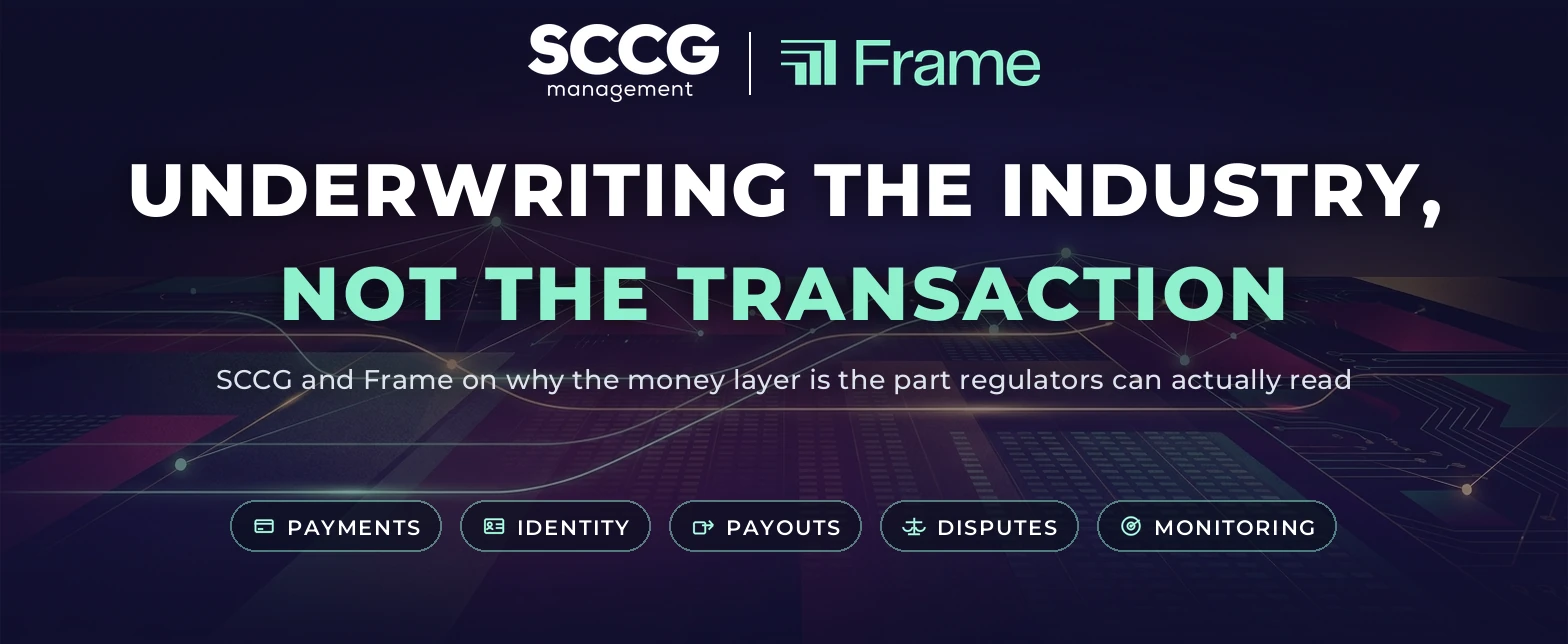
Underwriting the Industry, Not the Transaction
I have spent three decades in this business, and I started it inside a Nevada regulatory culture that treated a license as something you earned and kept earning. That culture teaches you to read companies a certain way. You stop listening only to what an operator says about itself, and you start reading what it built, because what a company builds is the part it cannot walk back.
Right now, three corners of this industry are all fighting the same fight at once. Prediction markets are in court and in front of the CFTC arguing that they are exchanges, not sportsbooks. Sweepstakes and social casino operators are watching states close the side door one statute at a time. Tribal gaming is defending both its sovereignty and its share of a market that keeps inventing new ways to route around it. Different rooms, same question. Each is trying to be seen as legitimate before the rules finish hardening around it.
Here is what I want operators in all three corners to hear. The moment you are being judged on legitimacy, your infrastructure stops being a procurement decision and becomes a public statement. And almost nobody is choosing it that way yet.
The money layer is the part regulators can actually read
An operator can put anything it wants in a pitch deck. It cannot fake how money moves through its platform. When a regulator, a sponsor bank, or a prospective partner looks at you, the cashier is where the talking stops and the evidence starts. Who did you verify, and when. How fast did a winner get paid, and what did you check before you released it. What happened to a disputed transaction. Where is the record.
Frame, the firm SCCG works alongside on this, puts it plainly on its own materials: the cashier is part of the product. I would go one step further. In a legitimacy fight, the cashier is the part of the product the outside world is allowed to inspect. Your game design is yours. Your money layer is on the record.
So when you choose that layer, identity, payouts, dispute handling, monitoring, you are not clearing a transaction. You are telling everyone who matters what kind of operator you intend to be. That is underwriting the industry’s credibility, not just your own volume.
Build for scrutiny before volume finds the cracks
That line is not mine. It is on the Frame and SCCG sweepstakes one-pager, and it has stuck with me because it inverts the usual order of operations. Most operators bolt on compliance after growth exposes the gap. By then the gap is a headline.
Sweepstakes is the clean example. The model runs on a dual-key structure, purchases on one side, promotional currency and prize redemptions on the other, and the whole thing only holds up if every step is auditable: purchase, bonus, play, redemption, reversal, chargeback. When a state attorney general or a sponsor bank comes asking, “the games drive demand, the money layer determines durability” stops being a marketing line and becomes the actual difference between a program that survives scrutiny and one that gets shut off from payment access overnight. Durability is not a growth feature you add later. It is a foundation you either poured or you did not.
Speed and trust are not a trade-off when the layer is built as one
There is a stubborn belief that you can have fast money movement or you can have tight controls, and that every point of one costs you a point of the other. That belief is a symptom of a stitched-together stack, a gateway here, a KYC vendor there, a payout rail somewhere else, none of them talking to each other.
Collapse those into one operating layer and the trade mostly disappears. As one industry proof point, a Visa Direct analysis of Paddy Power Betfair, a six-month operator study and not a Frame customer result, reported meaningful lifts once payouts and player experience were treated as one system, on the order of a few percent more weekly bets, a double-digit lift in weekly deposit value, and a sharp drop in contact-center inquiries. I cite it as what it is, someone else’s case study, because I hold my own numbers to the standard I hold everyone else’s. The direction is the point. When identity, fraud monitoring, payouts, and dispute handling run through one decision layer instead of five contracts, good players move faster, and your team manages fewer systems. Speed becomes a trust feature instead of a risk you are absorbing.
What I am telling operators to do about it
If you are running toward legitimacy in any of these three corners, treat your money and compliance layer as a strategic choice with your name on it, not a back-office line item you delegate down. Ask the uncomfortable questions before someone with subpoena power asks them for you. Can you produce the record? Can you defend the flow? Would the architecture you have today read as serious to a regulator who has never met you and owes you nothing?
That is the read I have done in my head for thirty years on operators I was deciding whether to stand next to. It is worth doing on yourself, deliberately, while you still have the room to change the answer.
This is exactly why SCCG and Frame put a joint assessment together, a structured look at how money actually moves through your platform, where the cost and the control gaps sit, and what the lowest-lift first step looks like. If you are in one of these fights and you want an honest read before the rules finish hardening, that is a conversation worth having with us. You can reach us at sccgmanagement.com/contact.
Stephen A. Crystal is the Founder and CEO of SCCG Management, a global advisory firm in the gaming industry working across operators, suppliers, technology providers, and capital.
In legitimacy fights, your cashier is the part of your business the outside world can inspect — choose it like it.
We work with operators navigating prediction market battles, sweepstakes crackdowns, and tribal sovereignty fights. What they share: regulators judge infrastructure before messaging. The money layer — identity, payouts, dispute handling — is the part you can't pitch-deck your way around. That stack is now a public statement, not a back-office detail.
- Regulators can't audit your pitch deck, but they can read how money moves through your platform
- Sweepstakes, prediction markets, and tribal operators all face the same credibility test in different rooms
- Cashier infrastructure is now the evidence layer — choose it before volume exposes the gaps
SCCG angle: SCCG connects operators to the infrastructure partners who build for regulatory inspection, not just transaction flow — payment layers, identity stacks, compliance architectures that hold up under state AG review and sponsor bank audits. We help clients choose durability before the headlines write themselves.
Gaming, betting and prediction markets — the desk’s read, every weekday.
Subscribe →