Bragg Gaming Acquires Drayton International in Share Deal
Bragg Gaming’s Share-Based Acquisition of Drayton International Accelerates US iGaming, AI Capabilities, and ADW Market Entry
A Strategic Inflection Point in iGaming M&A
Bragg Gaming Group announced it has signed a definitive agreement to acquire Drayton International, a diversified gaming technology and content platform. The deal is structured entirely in equity, with Bragg issuing 4.5 million newly issued common shares priced at USD 2.00 per share to acquire 100% of Drayton’s equity interest.
The transaction also brings Matt Davey, founder and chair of Tekkorp Capital, onto Bragg’s board as non-executive chair. This move replaces Holly Gagnon in the chair role while she remains an independent director. As someone who has spent decades observing the evolution of gaming technology and capital markets, I see this as a clear example of disciplined, share-based M&A that aligns incentives and accelerates strategic priorities without straining cash reserves.
Strengthening the Core While Expanding into ADW
Bragg described the acquisition as a “bold step forward” that aligns with its commitment to crafting captivating proprietary gaming worlds and its ambition to remain a games-first company. The deal sharpens Bragg’s focus, supports continued growth in the US, reinforces its AI capabilities, and strengthens revenue growth.
A key element is Bragg’s entry into the ADW space. Matevž Mazij, CEO, Bragg Gaming Group, noted that the transaction marks Bragg’s foray into alternative deposit wagering, turning parimutuel wagering into a high-engagement experience. Such products have been especially popular in the US, Bragg’s core market.
The acquisition grants Bragg rights to full ownership of five studios in which Drayton holds stakes: Boomerang Studios, Dream Streak Gaming, Rise Gaming, Hit Squad, and Neotopia. Drayton also owns 100% of the platforms Arc Gaming, Vision PlAI, and 3 Shores. These assets bring new games, technology, and distribution channels that complement Bragg’s existing offerings.
Matt Davey’s Role and Capital Markets Signal
Matt Davey’s appointment as non-executive chair is directly tied to the Drayton transaction. Davey, already a Drayton shareholder, will hold a stake of roughly 10% in Bragg post-merger. He previously purchased 1 million common shares in Bragg, demonstrating clear confidence in the company’s direction.
Davey commented that Drayton’s business will greatly complement Bragg’s by bringing in new games, technology, and distribution. In his statement on the appointment he said: “After discussions with Matevž, his team, and other Board members, I am excited to invest my time and energy to help accelerate growth, drive operational performance, and enhance shareholder value. It’s clear we have a first-rate team, premium iGaming offering, and now a new vibrant aesthetic which I’m confident will be attractive to the market.”
This share-based structure allows Bragg to execute meaningful M&A while preserving liquidity. The securities issued will not be registered under the US Securities Act and may not be offered in the US. In an environment where many operators face pressure on capital deployment, this discounted equity issuance signals confidence from a seasoned investor like Davey while aligning long-term incentives across the combined entity.
Regulatory Agility and the Risk Landscape
Matevž Mazij framed the deal’s importance in the context of a shifting US market. He stated: “The US landscape is shifting, and we believe that Bragg’s relative speed and regulatory agility is already beginning to translate into our being leaders rather than followers in the Alternative Markets space.”
This regulatory agility represents a genuine competitive advantage. However, every acquisition carries execution risk. The deal remains subject to customary regulatory approvals and closing conditions. Should those approvals be delayed or denied, the anticipated benefits to AI capabilities, studio integration, and ADW product rollout could be postponed beyond the targeted third quarter close.
Integration of multiple studios and platforms also demands disciplined operational focus. While the transaction reinforces Bragg’s AI capabilities through assets such as Vision PlAI, realizing that upside will require seamless convergence of technology stacks and content pipelines. The risk of cultural or technical friction cannot be ignored even when strategic logic is strong.
The Bottom Line
Bragg’s acquisition of Drayton International via 4.5 million shares at USD 2.00 each represents a structural shift that accelerates its US iGaming footprint, deepens AI capabilities, and establishes a foothold in the high-engagement ADW vertical. By bringing in Matt Davey as non-executive chair with skin in the game, Bragg has secured both capital markets credibility and operational leadership at an inflection point for alternative markets.
The combination of regulatory agility, studio ownership, and a sharpened games-first strategy positions the company to lead rather than follow. Client-partners navigating this convergence of content, technology, and distribution should watch closely how Bragg integrates these assets in the quarters ahead. Success here could define a replicable model for disciplined, equity-financed growth in a maturing but still fragmented US landscape.
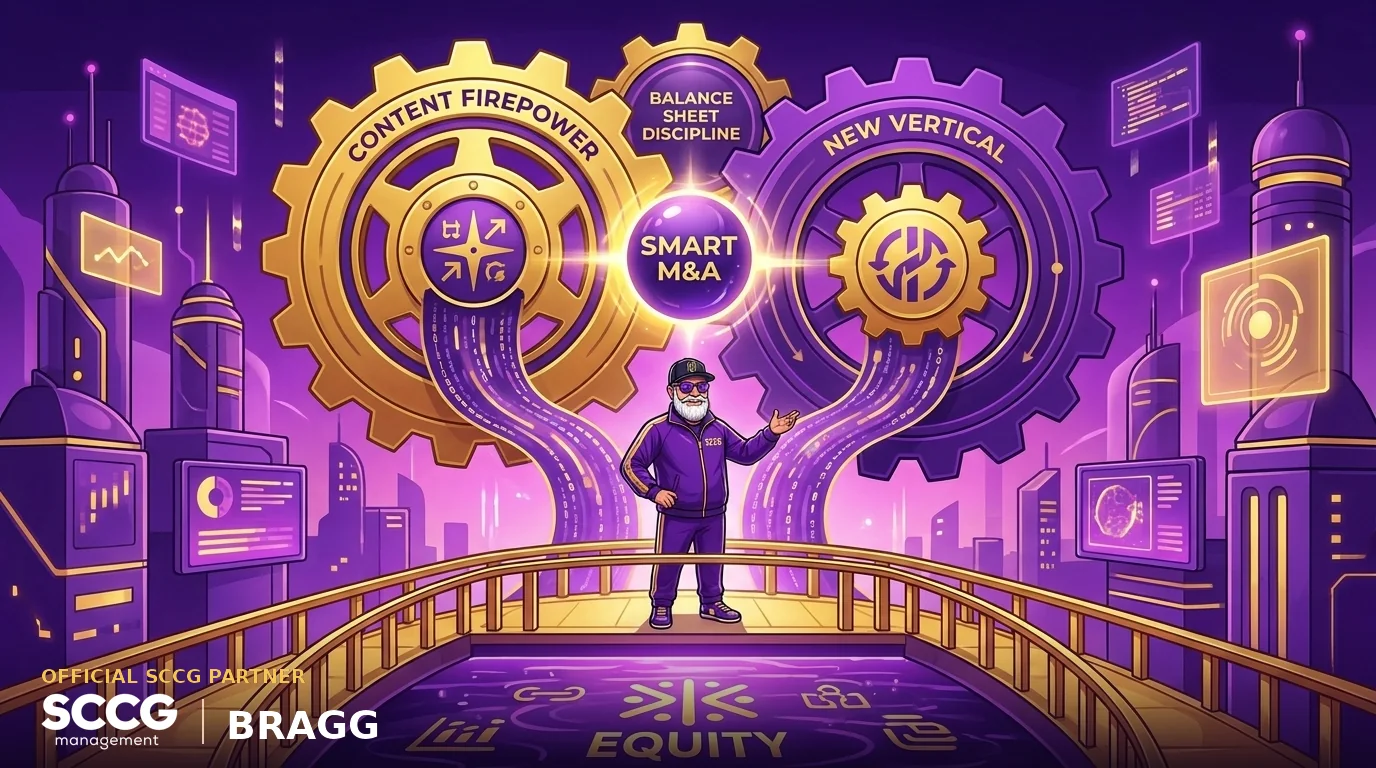
Bragg uses equity wisely to add content firepower and enter a new vertical without bleeding cash.
We see this move as textbook smart M&A in a market where consolidation still favors operators with diversified tech stacks. Bragg is not just buying content—it's buying a pathway into the alternative wagering space while keeping balance sheet intact. That discipline matters when regulatory winds shift.
- All-equity deal: 4.5M shares at USD 2.00, zero cash outlay preserves runway
- ADW market entry gives Bragg a new vertical and player base beyond core iGaming
- Matt Davey (Tekkorp Capital founder) joins board as non-executive chair, signaling capital-savvy governance
SCCG angle: Our 150+ partners across every regulated market give us real-time visibility on who wins in these roll-ups and why. If you're a Bragg partner or evaluating content tech stacks, we can tell you exactly how Drayton's capabilities plug into your own regulatory and growth strategy—and who else is making similar moves in your jurisdiction.
Gaming, betting and prediction markets — the desk’s read, every weekday.
Subscribe →